

Is Gym Dangerous for Heart Patients? Everything You Need to Know
For many people, the word “gym” brings up images of heavy weightlifting, intense running, and loud music. If you are a heart patient, these images might make you feel nervous. You might ask yourself, “Will my heart be able to take the pressure?” or “Is it safer to just stay at home and rest?”
For years, the common advice for heart patients was to “take it easy” and avoid physical strain. However, medical science has changed. Today, doctors encourage heart patients to stay active. But there is a very thin line between “healthy exercise” and “dangerous strain.”
In this detailed guide, we will explore whether the gym is dangerous for heart patients, how to exercise safely, and when you should talk to a heart specialist in Lucknow, Dr. Ajay Bahadur.
The Big Debate: Is the Gym Dangerous or Beneficial?

The answer is not a simple “yes” or “no.” It depends on how you exercise.
When you have a heart condition—whether it is high blood pressure, a previous heart attack, or a valve issue—your heart doesn’t pump blood as efficiently as a healthy heart. Going to the gym without a plan can indeed be risky. However, sitting on the couch all day is often even more dangerous. Inactivity leads to stiff arteries, weight gain, and a weaker heart muscle.
The goal for a heart patient at the gym is not to win a bodybuilding trophy. The goal is Cardiovascular Rehabilitation. This means using exercise to strengthen your heart, thin your blood, and make your body more energetic. Before starting, it is vital to consult the Best Cardiologist in Lucknow to understand your heart’s current strength.
Why Every Heart Patient Needs Exercise
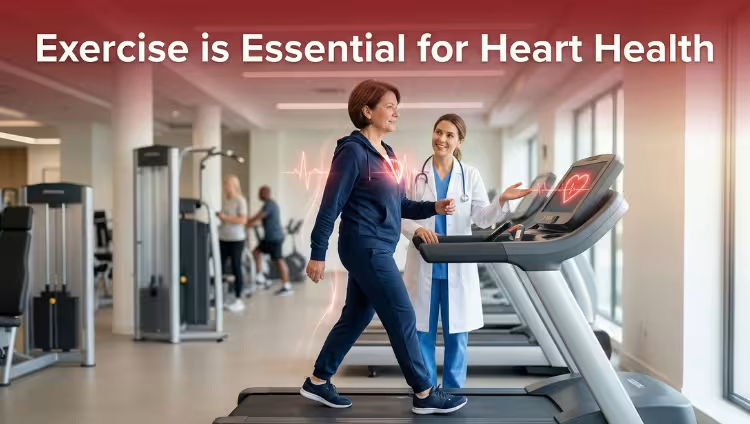
Before we talk about the risks, let’s look at why your heart doctor in Lucknow might actually recommend the gym:
-
Lower Blood Pressure: Regular, moderate exercise helps keep your blood vessels flexible. This makes it easier for blood to flow, which lowers your blood pressure.
-
Weight Management: Extra body fat, especially around the belly, puts significant pressure on the heart. The gym helps you burn calories and stay at a healthy weight.
-
Better Cholesterol: Exercise increases “good” cholesterol (HDL) and lowers “bad” cholesterol (LDL), preventing blockages in your arteries.
-
Strengthening the Heart Muscle: The heart is a muscle. Like your biceps, it gets stronger when you work it out gently. A stronger heart pumps more blood with less effort.
-
Mental Health: Heart issues often lead to anxiety or depression. Exercise releases endorphins, which help you feel happier and more confident.
Step-by-Step Guide: How to Start Your Gym Journey Safely
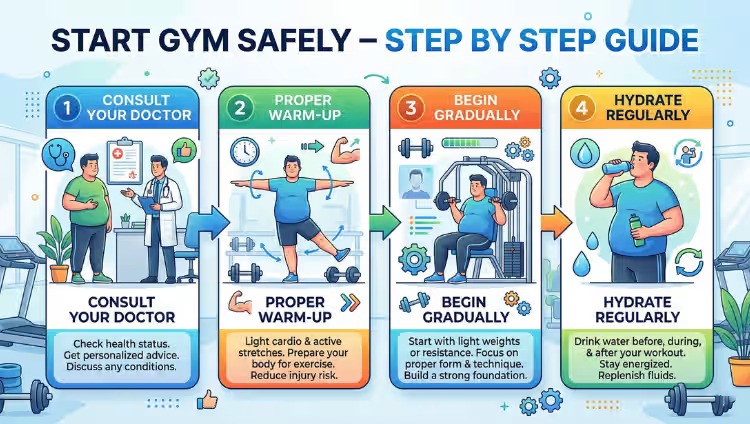
If you are ready to start, don’t just grab your sneakers and run to the nearest gym. Follow this step-by-step safety plan.
Step 1: Get Medical Clearance
This is the most important step. You must visit an Interventional Cardiologist. They may perform tests like an ECG, an Echo, or a TMT (Treadmill Test) to see how your heart behaves under stress. They will give you a “target heart rate” that you should never exceed.
Step 2: Find the Right Gym and Trainer
Not all gyms are suitable for heart patients.
-
Look for a gym that is well-ventilated and not too crowded.
-
Choose a trainer who has experience working with medical patients.
-
Show your trainer your medical reports and the advice given by your heart specialist in lucknow.
Step 3: The 15-Minute Warm-Up
For a healthy person, a 5-minute warm-up might be enough. For a heart patient, you need at least 15 minutes.
-
Start with very slow walking.
-
Do gentle arm circles and leg stretches.
-
This allows your heart rate to rise slowly rather than spiking suddenly.
Step 4: Focus on Aerobic (Cardio) Exercise
Cardio is the best friend of a heart patient.
-
Walking on the Treadmill: Keep it at a “brisk walk” pace. Avoid high inclines.
-
Stationary Cycling: This is excellent because you can stop instantly if you feel tired, and it doesn’t put pressure on your joints.
-
The “Talk Test”: While doing cardio, you should be able to speak a full sentence without gasping for breath. If you can’t talk, you are going too fast!
Step 5: Incorporate Light Strength Training
Building muscle helps your body use oxygen better.
-
Use light dumbbells (1kg to 3kg).
-
Focus on movements like bicep curls, wall push-ups, or leg extensions.
-
Crucial Rule: Never hold your breath while lifting. Exhale when you lift the weight and inhale when you lower it. Holding your breath can cause a dangerous spike in blood pressure.
Step 6: The Cool-Down
Never stop your workout abruptly. If you are running and you stop suddenly, blood can pool in your legs, making you feel dizzy or causing you to faint. Spend 10 minutes slowing down your pace until your heart rate is back to normal.
What Should Heart Patients Avoid in the Gym?
To keep your gym experience safe, you must avoid these “High-Risk” activities:
-
Heavy Powerlifting: Lifting very heavy weights causes a sudden, massive increase in blood pressure which can strain the heart valves.
-
High-Intensity Interval Training (HIIT): These workouts push the heart to its maximum limit. Unless your Interventional Cardiologist says otherwise, stay away from HIIT.
-
Hot Yoga or Steam Rooms: Extreme heat causes your blood vessels to dilate rapidly, which can lead to a drop in blood pressure and fainting.
-
Push-ups or Planks (for long periods): These are “isometric” exercises where you hold your breath and tension. They can be risky for people with heart failure or severe blockages.
Emergency Warning Signs: When to Stop
You must listen to your body. If you feel any of the following, stop exercising immediately and contact your heart doctor in Lucknow:
-
Chest Discomfort: Pain, pressure, or a “heavy” feeling in the chest, neck, or jaw.
-
Sudden Shortness of Breath: If you feel like you can’t get enough air even while resting.
-
Dizziness: Feeling lightheaded or like the room is spinning.
-
Palpitations: Feeling like your heart is skipping a beat or racing uncontrollably.
-
Extreme Fatigue: Feeling unusually tired the day after a workout. This means you pushed too hard.
Frequently Asked Questions
1. Is gym risky for the heart?
Gymming is only risky if you do it without medical supervision or if you push yourself too hard. For most heart patients, the risk of not exercising is higher than the risk of a controlled gym workout. Always follow the guidelines set by the Best Cardiologist in Lucknow.
2. Can a heart patient join the gym?
Yes! Most heart patients can join a gym after they have recovered from the acute phase of their illness (like a heart attack or surgery). However, you should start with “Cardiac Rehab” and then move to a regular gym once your doctor clears you.
3. क्या जिम करना दिल के लिए जोखिम भरा है? (Is gymming risky for the heart?)
जिम करना दिल के लिए तभी जोखिम भरा है जब आप बिना डॉक्टरी सलाह के भारी वजन उठाते हैं या बहुत तेज दौड़ते हैं। अगर आप मध्यम गति से एक्सरसाइज करते हैं और अपने heart specialist in Lucknow की सलाह मानते हैं, तो यह आपके दिल को मजबूत बनाता है। (Gymming is only risky if you lift heavy or run too fast without advice. If you follow your doctor’s advice, it makes your heart stronger.)
4. Is gym bad for the heart?
No, the gym is not “bad” for the heart. In fact, exercise is a part of the treatment for heart disease. It becomes “bad” only when you ignore warning signs, take harmful supplements, or try to compete with healthy people in the gym.
5. Can I take protein shakes or pre-workout?
Natural protein from food is best. Many “Pre-workout” supplements contain high caffeine which can cause heart rhythm problems. Never take any gym supplements without showing the ingredients to your heart doctor in Lucknow.
6. How many days a week should I go?
Starting with 3 days a week for 20–30 minutes is usually recommended. As you get stronger, you can increase it to 5 days a week. Consistency is more important than intensity.
7. What if I have a stent or have had bypass surgery?
People with stents or bypasses can and should exercise to keep the new pathways clear. An Interventional Cardiologist can help you design a plan that protects your surgery site while strengthening your heart.
Conclusion: Exercise is Your Best Medicine
The gym can be a place of healing for heart patients. It helps you regain your strength, improves your mood, and adds years to your life. The secret is to go slow, stay consistent, and keep your medical experts informed.
You don’t need to run a marathon. Even a 20-minute slow walk on a treadmill can do wonders for your heart health. Don’t let fear stop you from living a healthy life.
Take Control of Your Heart Health Today!
Are you planning to start a fitness routine but worried about your heart? Don’t take chances with your health. Get a personalized exercise plan from the Best Cardiologist in Lucknow.
Whether you need a full cardiac checkup or expert advice from a top Interventional Cardiologist, we are here to support your journey to a stronger heart.
Book Your Consultation Now!
[Click Here to Schedule an Appointment with a Leading Heart Specialist in Lucknow] or call us at [84290 29811].
