
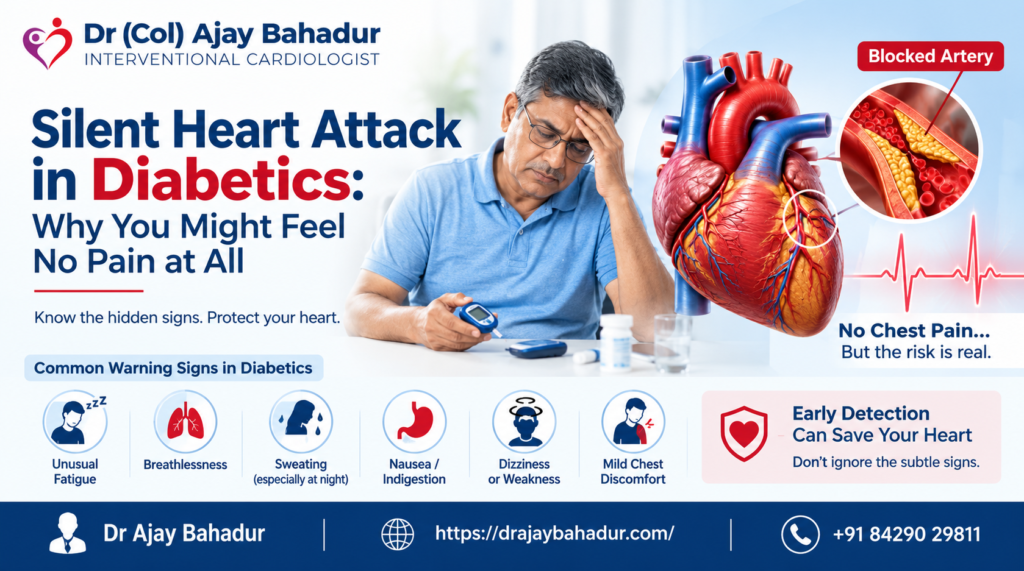
Silent Heart Attack in Diabetics: Why You Might Feel No Pain at All
Meta Description: Learn why diabetes can cause silent heart attacks without chest pain, warning signs to watch for, important tests, and when diabetics should seek cardiac care.
Introduction
A heart attack is commonly associated with sudden chest pain, pressure, sweating, or discomfort spreading to the arm or jaw. But this pattern does not happen in everyone.
People with diabetes may sometimes experience a silent heart attack, where the usual chest pain is absent, very mild, or mistaken for another problem.
A person may simply feel unusually tired, mildly breathless, nauseous, dizzy, or generally unwell. In some cases, the heart attack may only be discovered later during an ECG or other cardiac evaluation.
This can make silent heart attacks particularly difficult to recognize.
For people living with diabetes, understanding these less obvious warning signs is an important part of heart health.
Quick Answer: What Is a Silent Heart Attack?
A silent heart attack is a heart attack that occurs with little or no noticeable symptoms, particularly without the typical chest pain many people associate with a heart attack.
Diabetes can affect the nerves that carry pain signals from different parts of the body. This nerve damage, known as diabetic neuropathy, may reduce the way a person perceives discomfort.
As a result, a diabetic person may experience a heart attack without realizing what is happening.
However, silent does not mean harmless. A heart attack can still damage the heart muscle even when the warning symptoms are mild or absent.
Why Are Diabetics More Prone to Silent Heart Attacks?
Diabetes affects much more than blood sugar levels.
Persistently high blood glucose can gradually damage blood vessels and nerves. When nerves involved in the body’s automatic functions are affected, the condition may be called diabetic autonomic neuropathy.
These changes can interfere with the body’s normal response to problems affecting the heart.
Instead of experiencing obvious chest pain, a person may notice symptoms such as:
- Unusual tiredness
- Shortness of breath
- Sweating
- Nausea
- Indigestion-like discomfort
- Dizziness
- Weakness
- Reduced ability to perform normal activities
This does not mean every unusual symptom in a diabetic person is a heart attack. But new or unexplained symptoms should not automatically be attributed to diabetes, acidity, stress, or tiredness.
How Does Diabetes Affect the Heart?
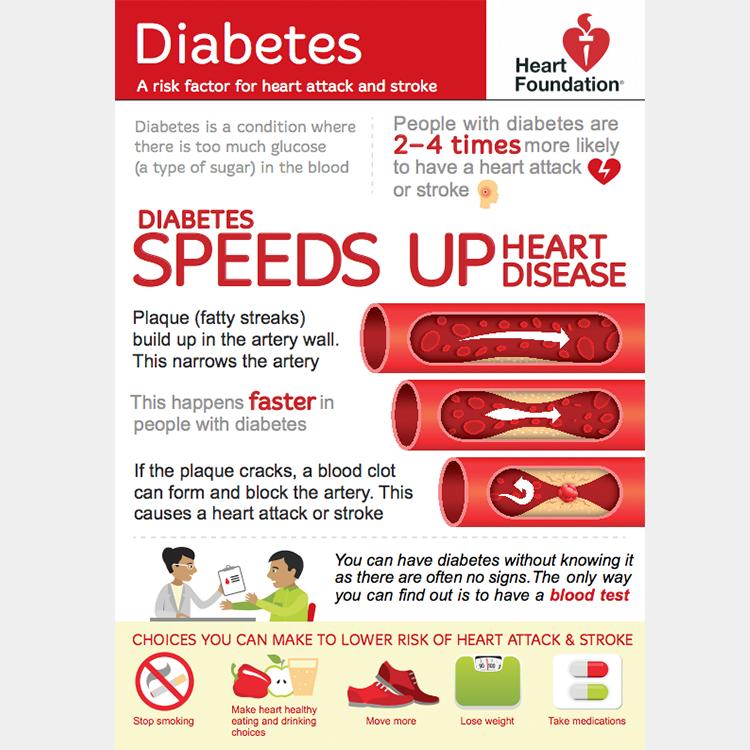
Diabetes can increase cardiovascular risk through several mechanisms.
High blood glucose over time can contribute to damage of blood vessels and is often associated with other cardiovascular risk factors such as:
- High blood pressure
- Abnormal cholesterol levels
- Obesity
- Reduced physical activity
- Smoking
- Kidney disease
These factors can contribute to coronary artery disease, in which plaque builds up inside the arteries supplying blood to the heart.
If a coronary artery becomes severely narrowed or blocked, part of the heart muscle may not receive enough oxygen. A prolonged interruption of blood flow can result in a heart attack.
What Does a Silent Heart Attack Feel Like?
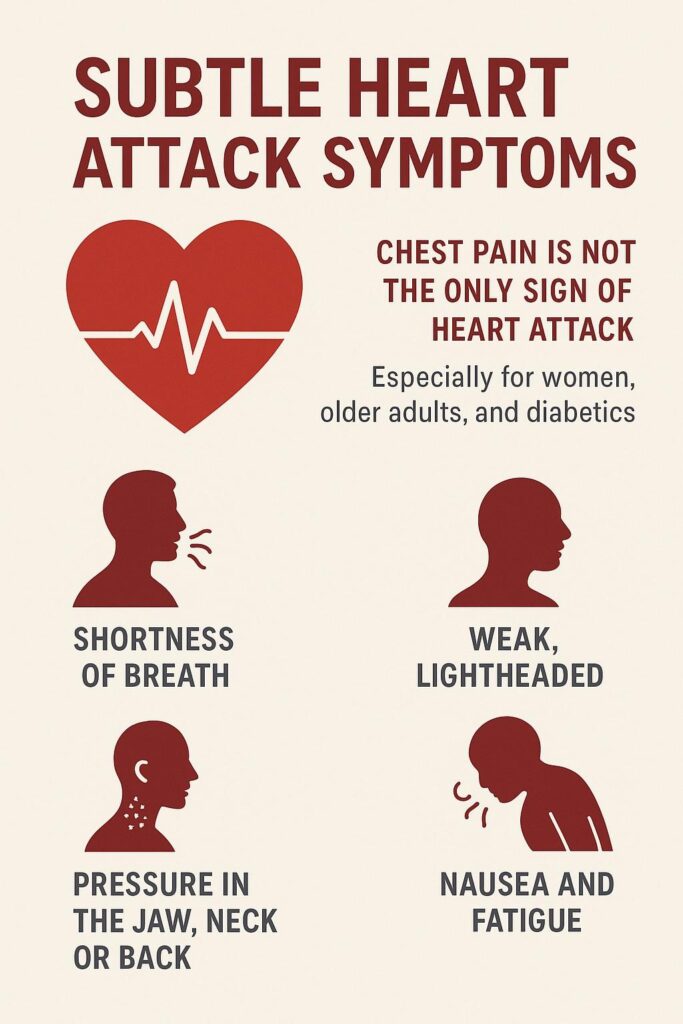
There is no single symptom that confirms a silent heart attack.
Instead, some people experience vague symptoms that they may not immediately connect with their heart.
Common Symptoms May Include
- Unusual fatigue
You may feel extremely tired despite getting enough sleep or doing your normal daily activities.
- Breathlessness
You may become short of breath while walking, climbing stairs, or performing activities that were previously easy.
- Unexplained sweating
Sudden sweating without exercise, heat, or another obvious reason can sometimes accompany a cardiac problem.
- Nausea or indigestion
Some people may mistake cardiac symptoms for acidity, gas, or stomach discomfort.
- Dizziness or weakness
Feeling suddenly lightheaded, weak, or unusually unsteady can sometimes occur during a cardiac event.
- Mild chest discomfort
A silent heart attack does not necessarily mean absolutely no chest sensation. Some people may experience mild pressure, heaviness, burning, or discomfort rather than severe pain.
Silent Heart Attack vs Typical Heart Attack
The main difference is often how noticeable the symptoms are, not how serious the underlying heart damage is.
| Typical Heart Attack | Silent Heart Attack |
| Chest pain or pressure may be obvious | Chest pain may be absent or mild |
| Symptoms may be easier to recognize | Symptoms may seem unrelated to the heart |
| Patient may seek emergency care quickly | Patient may delay seeking care |
| Diagnosis is often made during the acute event | Sometimes discovered later |
Importantly, the absence of chest pain should never be used to rule out a heart attack.
Why Silent Heart Attacks Can Be Missed
One of the biggest challenges is that the symptoms may look like everyday problems.
For example, a diabetic person may think:
“I am just tired.”
Or:
“It must be acidity.”
Or:
“I didn’t sleep well last night.”
But when these symptoms are new, unexplained, persistent, or unusually severe, they deserve medical attention.
The risk becomes even more important when the person also has high blood pressure, high cholesterol, smoking history, kidney disease, obesity, or a previous history of heart disease.
How Is a Silent Heart Attack Detected?
A silent heart attack may sometimes be identified through tests even when the person does not remember experiencing typical symptoms.
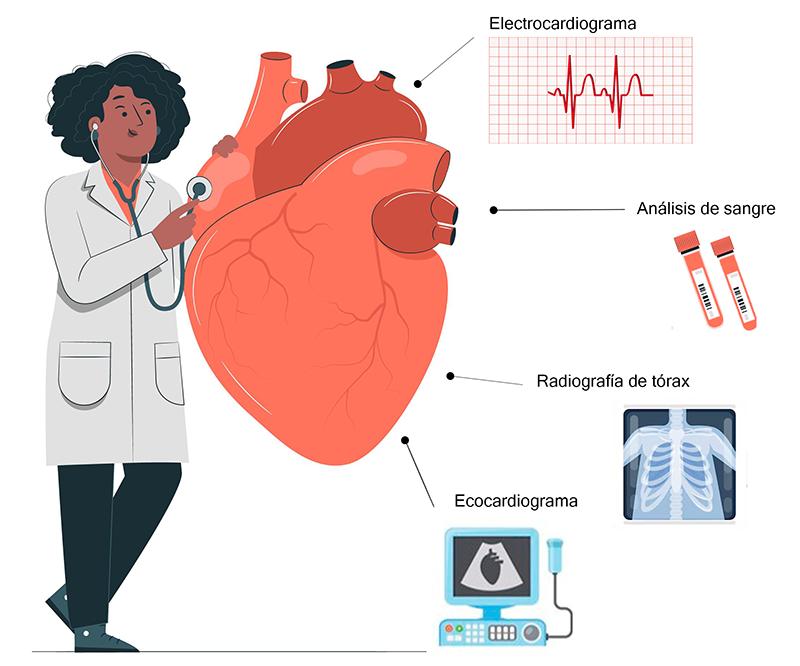
1. ECG
An electrocardiogram (ECG) records the electrical activity of the heart.
It may show changes associated with a current or previous heart attack.
However, an ECG cannot detect every cardiac problem by itself.
2. Echocardiogram
An echocardiogram uses ultrasound to assess the heart’s structure and pumping function.
It can sometimes show areas of the heart muscle that are not moving normally because of previous damage.
3. Troponin Blood Test
Troponin is a protein released into the blood when heart muscle is damaged.
A troponin test is particularly useful when doctors suspect a recent heart attack.
4. Coronary Imaging
Depending on the patient’s symptoms and risk profile, a cardiologist may recommend additional testing such as CT coronary angiography or conventional coronary angiography.
The appropriate test depends on the clinical situation.
Can a Silent Heart Attack Damage the Heart?
Yes.
The word “silent” refers mainly to the symptoms, not the amount of heart damage.
If blood supply to part of the heart is interrupted for long enough, heart muscle can be injured or permanently damaged.
Depending on the extent of damage, complications can include:
- Reduced heart pumping function
- Abnormal heart rhythms
- Heart failure
- Recurrent cardiac events
- Other cardiovascular complications
This is why recognizing risk factors and seeking timely medical assessment is important.
Diabetes and Coronary Artery Disease: Why the Combination Matters
Diabetes is one of several factors associated with cardiovascular disease.
The risk can increase further when diabetes occurs alongside:
- High blood pressure
- High LDL cholesterol
- Smoking
- Excess body weight
- Physical inactivity
- Kidney disease
- Family history of premature heart disease
- Previous cardiovascular disease
Managing these factors together is generally more useful than focusing on blood sugar alone.
What Should Diabetics Do to Protect Their Heart?
If you have diabetes, heart health should be part of your overall diabetes management.
Keep Blood Sugar Under Control
Follow your doctor’s recommendations for glucose monitoring, medication, food, physical activity, and HbA1c targets.
Monitor Blood Pressure
High blood pressure can increase cardiovascular risk. Regular monitoring helps identify changes early.
Check Cholesterol
Abnormal cholesterol levels can contribute to plaque formation in coronary arteries.
Avoid Tobacco
Smoking damages blood vessels and significantly increases cardiovascular risk.
Stay Physically Active
Regular physical activity, when medically appropriate, can support cardiovascular health and metabolic control.
Maintain a Healthy Weight
If you are overweight, even gradual and medically appropriate weight management can be beneficial for overall cardiovascular health.
Attend Regular Medical Check-ups
People with diabetes should discuss their individual cardiovascular risk with their treating doctor rather than waiting for symptoms to appear.
Should Every Diabetic Get an Annual Heart Check-up?
Not necessarily the same set of tests for every person.
Cardiac screening should depend on factors such as:
- Age
- Duration of diabetes
- Blood pressure
- Cholesterol
- Smoking
- Kidney function
- Family history
- Previous heart disease
- Current symptoms
- Overall cardiovascular risk
A doctor can decide whether an ECG, echocardiogram, stress testing, CT coronary angiography, or another evaluation is appropriate.
Routine testing should therefore be individualized rather than automatically identical for every diabetic patient.
When Should a Diabetic Seek Emergency Medical Care?
Do not wait for severe chest pain if you develop symptoms that could indicate an acute cardiac problem.
Seek urgent medical attention if you experience:
- Sudden or severe breathlessness
- Chest pressure, heaviness, or discomfort
- Unexplained sweating with weakness or nausea
- Fainting or near-fainting
- Sudden severe weakness
- New symptoms that are rapidly worsening
- Symptoms accompanied by known heart disease or significant cardiovascular risk
If you suspect a heart attack, emergency medical evaluation is more appropriate than waiting for symptoms to disappear at home.
Silent Heart Attack in Diabetics: Important Takeaways
Remember these five points:
- No chest pain does not always mean no heart problem.
- Diabetes can affect nerves and change how cardiac symptoms are perceived.
- Fatigue, breathlessness, sweating, nausea, and weakness can sometimes accompany cardiac problems.
- Multiple factors, including blood pressure, cholesterol, smoking, kidney health, and family history, influence diabetes-related cardiovascular risk.
- New or unexplained symptoms should be medically evaluated, especially when cardiovascular risk is high.
Frequently Asked Questions
Can a diabetic have a heart attack without chest pain?
Yes. Some people with diabetes can experience a heart attack with little or no typical chest pain. Symptoms may instead include breathlessness, fatigue, sweating, nausea, weakness, or dizziness.
Why are heart attacks sometimes silent in diabetics?
Long-term diabetes can cause nerve damage, including damage affecting the autonomic nervous system. This may alter how the body perceives or responds to pain and other cardiac symptoms.
Is a silent heart attack less serious?
No. “Silent” describes the lack of obvious symptoms. It does not mean that the heart muscle is protected from damage.
Can an ECG detect a silent heart attack?
An ECG can show changes associated with a current or previous heart attack, but it may not identify every cardiac problem. Doctors may use other tests depending on the situation.
Can a blood test detect a heart attack?
A troponin blood test can help detect heart muscle injury, particularly when a recent heart attack is suspected. Doctors interpret troponin results together with symptoms, ECG findings, and other clinical information.
Should diabetics worry about every episode of tiredness?
Not every episode of fatigue indicates a heart problem. However, new, unexplained, persistent, or unusual fatigue, especially when accompanied by breathlessness, sweating, nausea, dizziness, or chest discomfort, should be evaluated.
Can a silent heart attack be prevented?
There is no guarantee that every heart attack can be prevented. However, managing diabetes, blood pressure, cholesterol, smoking, weight, physical activity, and other cardiovascular risk factors can help reduce overall cardiovascular risk.
When to Talk to a Cardiologist
If you have diabetes and notice a new change in your exercise tolerance, unexplained breathlessness, unusual fatigue, recurrent dizziness, sweating, nausea, or any chest discomfort, discuss it with a healthcare professional.
A cardiologist can assess your symptoms alongside your diabetes history and other cardiovascular risk factors and determine whether further cardiac testing is appropriate.
About Dr. (Col) Ajay Bahadur
Dr. (Col) Ajay Bahadur is an Interventional Cardiologist in Lucknow with more than 35 years of experience in cardiology. He is associated with Apollomedics Hospitals, Lucknow, where he serves as Director – Interventional Cardiology.
His qualifications include:
MBBS | MD | DM (Cardiology) | FRCP (Glasg)
His clinical work includes evaluation and management of coronary artery disease, interventional cardiology procedures, pacemaker implantation, and other advanced cardiac treatments.
For patients with diabetes and cardiovascular risk factors, a detailed assessment can help determine the appropriate approach to heart-health monitoring and treatment.
Conclusion
A heart attack does not always announce itself with dramatic chest pain.
For people with diabetes, cardiac symptoms can sometimes be subtle or different from what is traditionally expected. Unusual fatigue, breathlessness, sweating, nausea, dizziness, or a general feeling that something is not right should not automatically be dismissed as acidity, stress, or tiredness.
The important message is simple:
Don’t rely on chest pain alone to recognize a heart problem.
Managing diabetes and other cardiovascular risk factors, understanding your personal risk, and seeking medical attention for new or unexplained symptoms can play an important role in protecting heart health.
If you have diabetes and are concerned about your cardiovascular risk, discuss your symptoms and screening needs with a qualified cardiologist.