
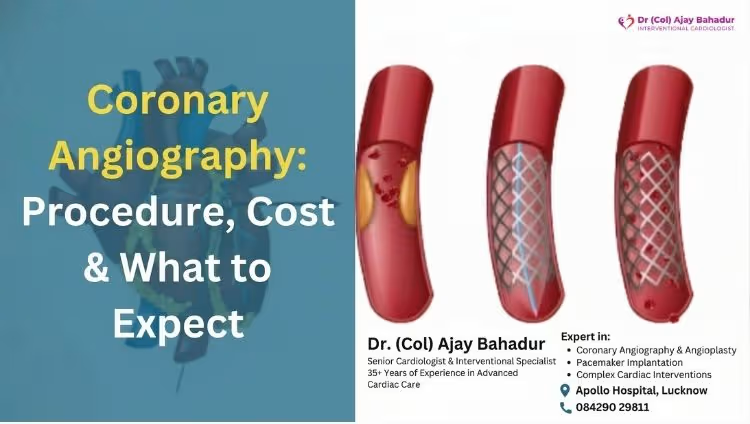
Posted By Dr Ajay Bahadur | Cardiologist in Lucknow
When it comes to our health, the heart is the hardest-working organ we have. It pumps blood every second of every day without a break. But sometimes, the “pipes” or arteries that supply blood to the heart itself can get clogged. To see exactly what is happening inside these pipes, doctors use a special test called Coronary Angiography.
If your doctor has suggested this test, you might be feeling a bit anxious. However, understanding the process can make it much easier. In this guide, we will walk you through everything you need to know about angiography in simple, easy-to-understand language. For those seeking the highest level of expertise, Dr Ajay Bahadur – Best cardiologist in Lucknow, is a trusted name for heart care and diagnostic precision.
What Coronary Angiography Actually Does
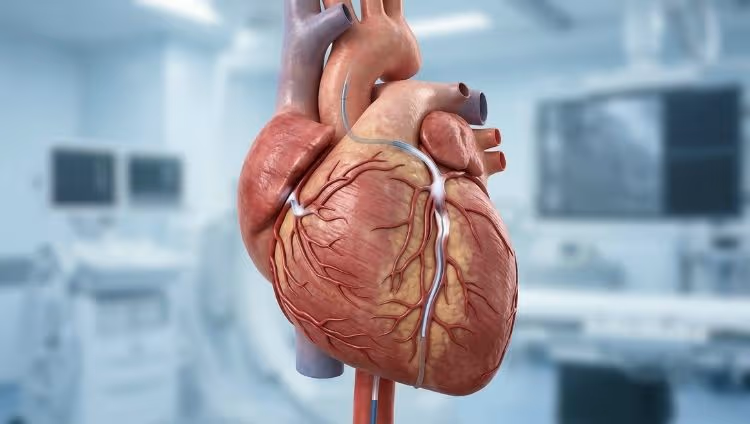
To understand what angiography does, imagine your heart’s arteries are like the plumbing in a house. Over time, grease and debris (cholesterol and fat) can build up inside the pipes, making it hard for water (blood) to flow through.
A standard X-ray cannot see blood vessels because they are soft. Coronary Angiography solves this problem by using a “contrast dye.” This dye is a special liquid that shows up clearly on X-ray images.
Here is the process in simple terms:
-
A thin, flexible tube called a catheter is inserted into an artery.
-
The dye is released into the heart’s arteries.
-
As the dye flows, the X-ray machine takes a series of rapid images (like a movie).
-
This “movie” shows exactly where the blood is flowing smoothly and where it is being blocked or narrowed.
This procedure doesn’t just show that there is a problem; it shows exactly where the problem is and how big it is. This is why Best cardiologist in Lucknow, considers it the “Gold Standard” for diagnosing coronary artery disease.
When Does a Cardiologist Recommend Angiography?
Not every heart patient needs an angiography immediately. Usually, a cardiologist starts with simpler tests like an ECG (Electrocardiogram), an Echocardiogram (an ultrasound of the heart), or a TMT (Treadmill Test).
However, if these tests show “positive” or “abnormal” results, or if your symptoms are severe, an angiography becomes necessary. Dr Ajay Bahadur, might recommend it in the following situations:
-
Unstable Angina: If you have chest pain that happens even when you are resting or is getting worse over time.
-
Heart Attack Susicion: If a patient arrives at the hospital with symptoms of a heart attack, an emergency angiography is done to find the blockage and open it immediately.
-
Silent Ischemia: Sometimes, people don’t have pain but their other tests show the heart isn’t getting enough oxygen.
-
Heart Valve Issues: If you are scheduled for heart valve surgery, the doctor needs to check the arteries first to ensure they are healthy.
-
Shortness of Breath: If you feel unusually tired or out of breath after walking just a short distance.
Preparing for Your Angiography: What to Do Before the Day
Preparation is key to ensuring the procedure goes safely. When you consult with Best heart specialist in Lucknow, his team will provide a checklist. Here is what you usually need to do:
Medical Tests:
Before the angiography, you will need a few blood tests. The most important one is the Serum Creatinine test. This checks your kidney function because the kidneys are responsible for filtering out the dye used during the procedure.
Fasting:
You will be asked to stop eating or drinking (fasting) for about 6 to 8 hours before the procedure. This is a safety measure in case you feel nauseous or need sedation.
Medication Management:
-
Diabetes Medicine: If you take Metformin or insulin, your doctor will tell you when to stop or adjust the dose.
-
Blood Thinners: Medicines like Warfarin or certain newer blood thinners may need to be stopped a few days in advance.
-
Blood Pressure Medicine: Usually, you can take these with a tiny sip of water, but always ask your doctor first.
Logistics:
Do not plan to drive yourself home. Even though the procedure is quick, the sedation or the puncture site (in the wrist or groin) requires you to rest. Arrange for a family member or friend to accompany you.
A Step-by-Step Guide to What Happens During the Procedure
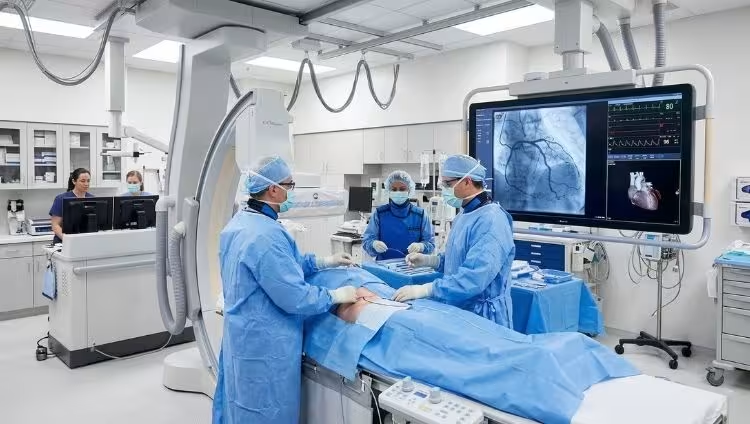
Many patients fear the “Cath Lab” (Catheterization Laboratory), but it is essentially a very high-tech X-ray room. Here is the step-by-step journey:
-
Preparation on the Table: You will lie on a flat, cushioned table. You will be awake, though you may be given a mild sedative to help you feel calm.
-
The Entry Point: The doctor will choose either your radial artery (wrist) or femoral artery (groin). The wrist is now the most common choice because it allows for faster recovery.
-
Local Anesthesia: The doctor will inject a numbing medicine at the entry site. You will feel a small prick, but after that, you shouldn’t feel pain.
-
The Catheter Insertion: A small sheath (a tiny tube) is placed in the artery. Through this, the catheter is guided to the heart. You will not feel the tube moving through your blood vessels because there are no pain nerves inside the arteries.
-
The Dye Injection: When the catheter reaches the heart, the doctor injects the dye. At this moment, you might feel a “warm flush” or a strange sensation that lasts for 10–20 seconds. This is completely normal.
-
The Imaging: The X-ray camera (a large C-shaped arm) will move around you to take pictures from different angles. You might be asked to hold your breath or cough slightly.
-
Finalizing: Once the images are clear, the catheter is removed.
Reading Your Results: What the Three Possible Findings Mean
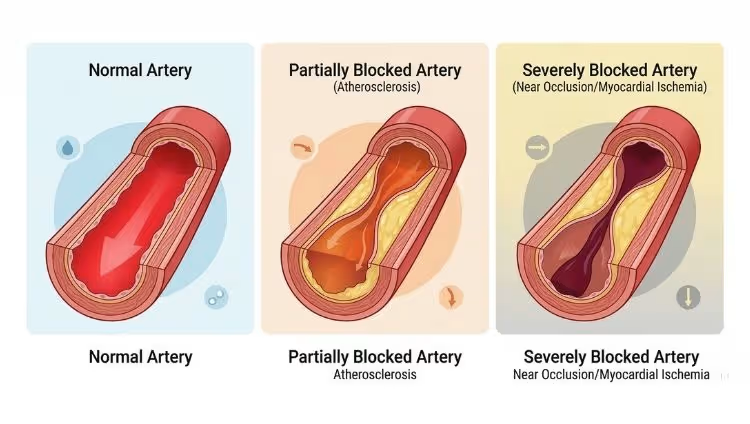
Once the test is over, Dr Ajay Bahadur – Best cardiologist in Lucknow, will review the “Angiogram” with you. The findings usually fall into one of three categories:
| Finding Type | What it Means | Next Steps |
| Normal / Clean | No significant blockages found. The arteries are wide open. | Focus on lifestyle, diet, and managing stress. |
| Mild to Moderate | Blockages are less than 70%. Blood is still flowing decently. | Managed with medications (Statins, Blood thinners) and strict diet. |
| Significant / Severe | Blockages are 70% to 100%. Blood flow is restricted. | Intervention needed: Angioplasty (Stenting) or Bypass Surgery. |
The 70% Rule: Generally, cardiologists consider a blockage “significant” if it covers more than 70% of the artery’s diameter. If the blockage is in the “Left Main” artery (the most important one), even a 50% blockage might be treated as serious.
Recovering After Angiography
The recovery phase depends on where the catheter was inserted.
-
If the wrist (Radial) was used: You can usually sit up and walk almost immediately. A tight band (TR Band) will be placed on your wrist for a few hours to stop any bleeding.
-
If the groin (Femoral) was used: You will need to lie flat on your back for 4 to 6 hours. This is to ensure the artery closes properly and doesn’t bleed.
At-Home Care:
-
Drink Water: This is the most important instruction. Water helps your kidneys wash away the contrast dye.
-
No Heavy Lifting: Avoid lifting buckets of water or heavy bags for 2-3 days.
-
Check the Site: A small bruise is normal. However, if you see a sudden large swelling (like a golf ball) or if there is active bleeding, call your doctor immediately.
Angiography Cost in Lucknow: Government Schemes and Private Hospitals
In Lucknow, the cost of a coronary angiography can vary depending on where you choose to have it done.
Private Hospitals:
In well-equipped private hospitals, the cost usually ranges from ₹12,000 to ₹25,000. This often includes the procedure, the dye, and a few hours of stay in the recovery room.
Government Schemes:
Lucknow has excellent facilities for those who need financial assistance.
-
Ayushman Bharat (PMJAY): If you have an Ayushman card, the procedure is often completely free in empanelled hospitals.
-
SGPGI & KGMU: These premier government institutes offer angiography at subsidized rates, often below ₹10,000.
-
State Government Schemes: Employees of the UP government can avail of cashless treatments in many private hospitals under specific schemes.
When you consult with Best heart doctor in Lucknow, the team can help guide you on the most cost-effective way to get the procedure done without compromising on quality.
Is Angiography Safe? Understanding the Real Risk Picture

It is very common for patients to be scared of anything involving the heart. However, it is important to put the risks into perspective.
The Reality:
Coronary Angiography is considered a “minimally invasive” procedure, not a major surgery. The risk of serious complications is less than 1%.
Potential Minor Risks:
-
Bruising: This is common and goes away in a few days.
-
Allergy: Some people are allergic to the dye (itching or hives). Doctors give a small dose first to check, and they have medicines ready to stop any reaction.
-
Kidney Stress: In elderly patients or those with pre-existing kidney issues, the dye can be a bit harsh. This is why doctors check creatinine levels first and may give extra IV fluids to protect the kidneys.
The risk of not doing the angiography when it is needed is much higher, as it could lead to an undiagnosed heart attack.
About Dr (Col) Ajay Bahadur
Choosing the right doctor is the most important decision for your heart. Dr (Col) Ajay Bahadur is widely recognized as the Best cardiologist in Lucknow. With a prestigious background as a Colonel in the Indian Army, he brings a level of discipline, precision, and dedication that is rare to find.
Why Patients Trust Dr (Col) Ajay Bahadur:
-
Military Precision: His training ensures that every procedure is handled with meticulous attention to detail.
-
Extensive Experience: He has performed thousands of angiographies and complex angioplasties (stenting).
-
Patient-First Approach: He believes in explaining the “why” and “how” to the patient in simple terms, ensuring they are comfortable and informed.
-
Advanced Technology: He utilizes the latest cardiac imaging technology to ensure the most accurate diagnosis possible.
Whether you are seeking a second opinion or need an emergency intervention, having a veteran like Dr (Col) Ajay Bahadur by your side ensures your heart is in the best possible hands.
Frequently Asked Questions (FAQs)
1. Will I be unconscious during the procedure?
No. You will be awake. You might be given a mild sedative to help you stay calm, but you will be able to talk to the doctor and even see the images on the monitor.
2. How long does the angiography take?
The procedure itself usually takes only 15 to 30 minutes. However, you will need to spend a few hours in the hospital for preparation and recovery.
3. Is the dye used in angiography dangerous?
For most people, it is perfectly safe. The only concern is for people with very weak kidneys. This is why a blood test is always done beforehand to ensure your kidneys can handle the dye.
4. Can I go back to work the next day?
If your work is a desk job and the procedure was done through the wrist, most people can return to work in 24 to 48 hours. If your work involves heavy physical activity, you should wait 3 to 5 days.
5. What is the difference between Angiography and Angioplasty?
-
Angiography is a test to find the blockage (Diagnosis).
-
Angioplasty is the treatment to fix the blockage using a balloon and a stent.
Often, if a doctor finds a blockage during angiography, they can perform the angioplasty in the same sitting.
Conclusion
Coronary Angiography is the most powerful tool a doctor has to see the “road map” of your heart. It is a quick, safe, and highly accurate way to ensure your heart is getting the blood it needs.
If you have symptoms like chest pain or breathlessness, do not ignore them. Consult with Dr. Ajay Bahadur, cardiologist in Lucknow, to get a clear picture of your heart health. Early diagnosis is the best way to ensure a long and healthy life!
