
Posted by Dr (Col) Ajay Bahadur | Best Cardiologist in Lucknow
Winter is more than just cold weather. For people with heart problems or high blood pressure, it can be a dangerous season — if they are not careful.
Here’s the good news: most winter heart problems can be prevented if you understand what’s happening in your body.
What Happens to Your Body in Cold Weather?
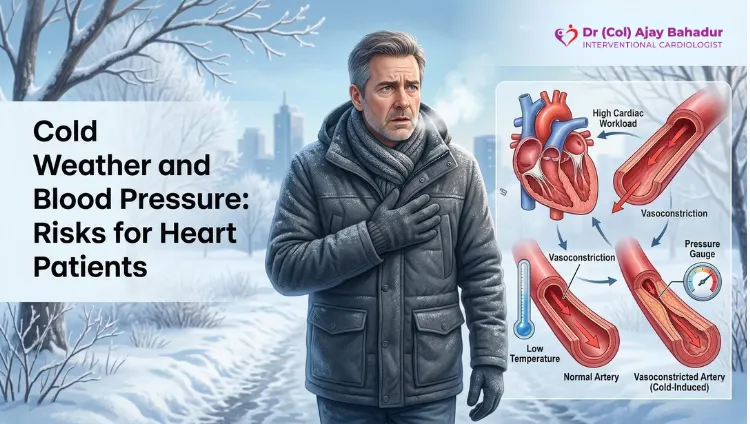
When it gets cold, your body tries to stay warm. To do this, your blood vessels become narrow. This is called vasoconstriction.
When blood vessels narrow:
- Blood has less space to flow through
- The heart has to push harder
- Blood pressure goes up
At the same time, your body releases stress hormones like adrenaline. These hormones make your heart beat faster and tighten your blood vessels even more.
For a healthy person, this is manageable. But for someone with high blood pressure or heart disease, this extra pressure can be dangerous.
Why Do Heart Attacks Happen More in Winter?
Winter heart attacks don’t happen because of just one reason. Usually, several things happen at the same time.
Sudden temperature change — Going from a warm room into cold air causes blood vessels to tighten fast. If your heart arteries are already narrow due to blockages, they may not get enough blood. This can cause a heart attack.
Morning danger — Blood pressure naturally rises in the morning. In winter, add cold temperature on top of that, and the heart faces double stress. Many winter heart attacks happen in the early morning hours.
Heavy activity in cold weather — Shoveling snow, carrying heavy bags, or climbing stairs quickly in cold air can be risky. Your blood vessels are already tight, so the heart works very hard to supply oxygen.
Chart 1: Common Winter Heart Risk Triggers
| Risk Factor | Why It’s Dangerous | Who Is Most at Risk |
|---|---|---|
| Sudden cold exposure | Blood pressure spikes quickly | All heart patients |
| Morning cold air | Double BP surge (hormones + cold) | Hypertension patients |
| Heavy physical activity | Heart oxygen demand exceeds supply | Coronary artery disease patients |
| Dehydration | Blood thickens, circulation slows | Heart failure patients |
| Skipping medication | BP becomes unstable | All heart patients |
Chest Pain in Winter — Is It Serious?
Not all chest pain in winter is a heart attack. But you should know the difference.
Cold-induced chest pain (Angina) usually happens when you walk in cold air or do physical activity. It often goes away when you rest.
Heart attack symptoms are different. They are more serious and do not go away with rest. Watch out for:
- Chest pressure lasting more than a few minutes
- Pain spreading to your arm, neck, or jaw
- Sweating or feeling sick
- Difficulty breathing
If you have any of these symptoms, do not wait. Many patients in Lucknow have avoided serious heart damage by reaching Dr. Ajay Bahadur‘s clinic early at the first sign of symptoms, rather than waiting to see if the pain goes away.
Blood Pressure Control in Winter — A Hidden Problem
Many patients don’t realize that blood pressure changes with the seasons.
In winter, blood pressure often goes higher. But many people check it less often during this time — because of holidays, travel, or skipping doctor visits.
This is a big mistake.
The medication that worked fine in summer may not be enough in winter. Your doctor may need to adjust your dose. Dr. Ajay Bahadur, widely regarded as the best Heart Doctor in Lucknow, regularly reviews long-term blood pressure trends in his patients during winter consultations — because a single reading is never enough to understand the full picture.
Chart 2: Blood Pressure Behaviour — Summer vs Winter
| Season | Blood Vessel State | Typical BP Level | Medication Need |
|---|---|---|---|
| Summer | Relaxed and wider | Lower | Standard dose often sufficient |
| Winter | Tight and narrow | Higher | May need dose adjustment |
| Sudden cold day | Very tight | Spike possible | Extra monitoring needed |
| Indoor heating | Slightly relaxed | Moderate | Monitor regularly |
3 Risks Most People Don’t Know About
1. Your medication may work differently in winter. Blood pressure medicines are adjusted for your normal BP. If winter pushes your BP higher, the same dose may not be enough. Never adjust your medicine yourself — always talk to your doctor first.
2. Cold weather can make blood clots more likely. In cold temperatures, blood can become thicker and more likely to clot. This slightly increases the risk of heart attacks and strokes. Combined with high blood pressure, this risk grows bigger.
3. Cold shock can trigger a heart attack. If you step into very cold air suddenly, your body reacts in an instant — heart rate jumps, breathing speeds up, blood pressure surges. For someone with blocked arteries, this sudden shock can rupture a plaque and block blood flow to the heart.
Simple Ways to Protect Your Heart in Winter
You don’t need to fear winter. You just need to be smart about it.
Dress in warm layers. Keeping your body warm reduces the strain on your heart and helps keep blood pressure stable.
Move slowly, not suddenly. Avoid jumping into heavy physical activity without warming up first, especially in cold conditions.
Check your blood pressure regularly. Winter changes can raise your BP without obvious symptoms. Regular monitoring helps you catch problems early.
Drink enough water. Cold weather reduces your thirst, but your body still needs fluids. Dehydration thickens the blood and stresses the heart.
Never skip your medicines. Even one missed dose can cause your blood pressure to become unstable.
Visit your heart doctor. Regular check-ups during winter help your doctor spot seasonal changes in your blood pressure and adjust your treatment if needed.
Frequently Asked Questions (FAQs)
Q1. How much can blood pressure rise in cold weather?
Blood pressure can rise noticeably in cold weather — sometimes by 10 to 20 mmHg or more in people with existing hypertension. The exact rise depends on how cold it is, how long you are exposed, and your overall heart health. Even a small rise can be significant if your blood pressure is already high. This is why regular monitoring in winter is so important.
Q2. Is it safe for heart patients to exercise in winter?
Yes, heart patients can exercise in winter, but they should take precautions. Avoid exercising outdoors in very cold or windy conditions. If you do go outside, dress warmly and warm up slowly before increasing intensity. Avoid sudden, heavy exertion like shoveling snow without taking breaks. Indoor exercise is generally safer during extreme cold. Always follow your doctor’s advice about the right type and level of exercise for your condition.
Q3. Should heart patients change their medication in winter?
You should never change your medication on your own. However, it is a good idea to talk to your cardiologist at the start of winter. Your doctor can review your blood pressure readings and decide if any adjustment is needed. Some patients do need a slightly higher dose during colder months. Regular monitoring and open communication with your doctor is the safest approach.
Final Thoughts
Cold weather does not cause heart disease. But it does put extra pressure on the heart — and it can reveal problems that were already there.
Most winter heart problems are preventable. Check your blood pressure often, take your medicines as prescribed, stay warm, stay hydrated, and see your heart doctor regularly.
If you are living with hypertension or any heart condition and want expert guidance this winter, consulting Dr. Ajay Bahadur — best cardiologist in Lucknow — can help you understand your personal risk and build a plan to stay safe through the season.
Understanding how winter affects your heart is the first step to protecting it.
