
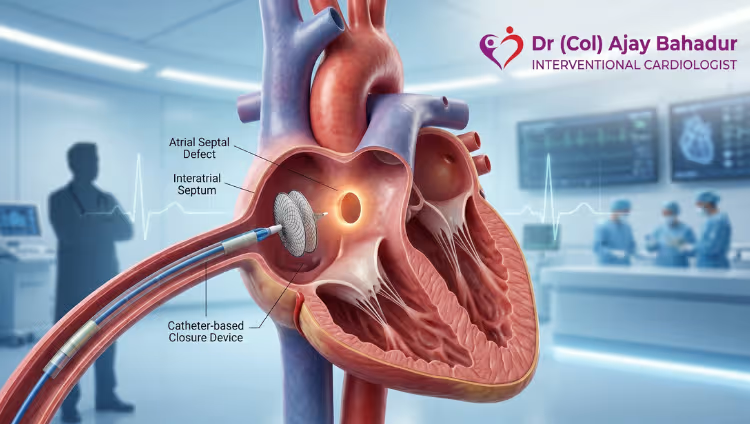
What is ASD, and How is ASD Closure Done? A Complete Guide to Heart Health
Posted by Dr Ajay Bahadur | Cardiologist in Lucknow
The human heart is often described as the hardest-working engine in the world. From the moment we are born until our last breath, it pumps blood to every corner of our body. However, sometimes people are born with a small structural problem—a “hole in the heart.” In medical terms, this is called an Atrial Septal Defect (ASD).
If you or a family member has been diagnosed with this, you probably have many questions. How serious is it? Can it be fixed without major surgery? Who is the best heart doctor to handle this? In this detailed guide, we will explore everything you need to know about ASD Closure treatment and how the heart specialist in Lucknow can help you regain your health.
Understanding the Heart: What is an Atrial Septal Defect?
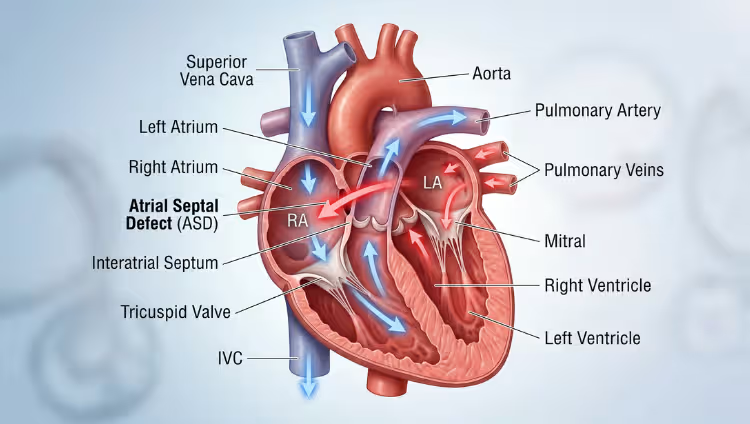
To understand ASD, imagine your heart as a two-story house with four rooms. The two rooms on the top floor are called the “atria.” There is a wall between the left room and the right room. This wall is called the “septum.” Its job is to keep oxygen-rich blood (which comes from the lungs) separate from oxygen-poor blood (which is going back to the lungs).
An Atrial Septal Defect (ASD) is a hole in that wall. When there is a hole, the “clean” oxygen-rich blood leaks into the “dirty” blood side. This creates a mess in the heart’s plumbing system. The heart has to pump much harder to move the extra blood, and the lungs get flooded with more blood than they can handle. Over time, this extra work wears out the heart.
A Real-Life Example: Sunita’s Journey to Recovery
Let’s look at a real-life example to see how this affects a person. Sunita, a 32-year-old school teacher from Lucknow, always felt a bit more tired than her colleagues. She thought it was just the stress of her job. However, during a routine check-up, she mentioned that she often felt her heart “thumping” fast when she walked quickly.
She decided to visit the best heart doctor in her city. After an ultrasound of the heart (Echocardiogram), she was told she had a 20mm ASD. Sunita was scared of “open-heart surgery.” However, her doctor explained that modern ASD Closure treatment doesn’t always require opening the chest.
Sunita chose to undergo a non-surgical device closure performed by the best cardiologist in Lucknow. The procedure took less than an hour. She stayed in the hospital for just one night and was back in her classroom teaching within a week. Today, she has more energy than she ever had in her 20s.
Why Does a Hole in the Heart Happen?
Many parents ask, “What did we do wrong?” The answer is: nothing. ASD is a “congenital” heart defect, which means it is present at birth. While the baby is growing inside the mother, the heart develops from a simple tube into a complex four-chambered organ. Sometimes, the wall between the upper chambers doesn’t close completely.
While doctors aren’t 100% sure why this happens, it can be linked to genetics or environmental factors during pregnancy. The important thing to remember is that it can be fixed effectively with modern ASD Closure treatment.
Common Symptoms You Should Never Ignore
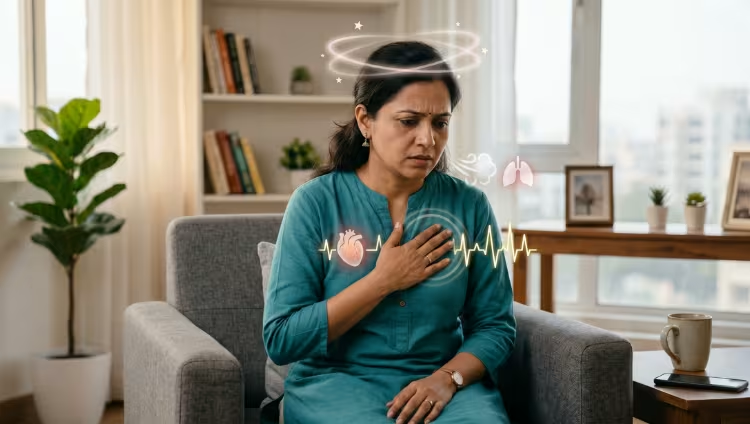
In many cases, children with ASD look perfectly healthy. The symptoms often show up later in life, usually in the 20s, 30s, or even 40s. If you notice these signs, you should consult the best heart doctor:
-
Shortness of Breath: Feeling winded while walking, climbing stairs, or exercising.
-
Easy Fatigability: Getting tired much faster than other people your age.
-
Heart Palpitations: Feeling like your heart is skipping a beat, fluttering, or racing.
-
Lung Infections: Getting frequent colds, coughs, or pneumonia.
-
Stroke: In rare cases, a blood clot can pass through the hole and travel to the brain.
-
Swelling: Noticing puffiness in the legs, feet, or abdomen.
How the Best Heart Doctor Diagnoses ASD
When you visit a specialist like Dr Ajay Bahadur, they follow a careful process to confirm the diagnosis:
-
Physical Exam: The doctor uses a stethoscope to listen to your heart. A hole often creates a specific sound called a “heart murmur.”
-
Echocardiogram (Echo): This is the most important test. It uses sound waves to create a live video of your heart. The doctor can see the hole and measure its size.
-
Electrocardiogram (ECG): This records the electrical activity of your heart to see if the hole is causing rhythm problems.
-
Chest X-ray: This helps the doctor see if the heart is enlarged or if there is extra fluid in the lungs.
-
Cardiac MRI: Sometimes used for very complex cases to get a high-definition 3D view of the heart.
Why You Should Not Delay ASD Closure Treatment
You might wonder, “If I feel fine, why should I fix it?” The problem with a hole in the heart is that it causes “silent” damage.
If left untreated, the constant extra blood flow to the right side of the heart causes it to stretch and weaken. More importantly, it increases the pressure in the lung arteries—a condition called Pulmonary Hypertension. If the pressure becomes too high, the damage becomes permanent and cannot be fixed. Choosing ASD Closure treatment early prevents these life-threatening complications.
Comparing Treatment Options: Device vs. Surgery
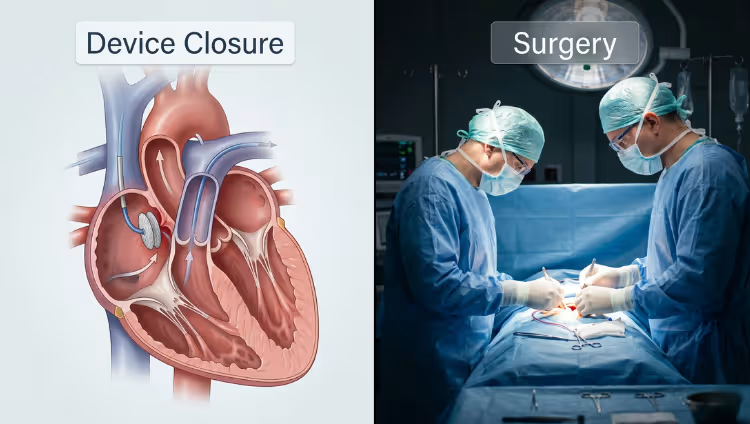
There are two main ways to fix an ASD. The best heart doctor will choose the method based on the size and location of the hole.
| Feature | Device Closure (Non-Surgical) | Surgical Closure (Traditional) |
| How it’s done | Through a small tube in the leg | Through an incision in the chest |
| Anesthesia | Sedation or light anesthesia | General anesthesia (Deep sleep) |
| Hospital Stay | 24 to 48 hours | 5 to 7 days |
| Recovery Time | 2 to 4 days | 6 to 8 weeks |
| Scars | No visible scars | Permanent chest scar |
| When it’s used | For holes with good “rims” around them | For very large or complex holes |
Step-by-Step Guide: The Non-Surgical Device Closure
This is the most common way ASD Closure treatment is done today. It is a “minimally invasive” procedure.
Step 1: Getting Ready
The patient is taken to the Cardiac Catheterization Lab (Cath Lab). The area in the groin is cleaned and numbed. Most patients are given medicine to make them feel very sleepy and relaxed.
Step 2: Entering the Vein
The best cardiologist in Lucknow makes a tiny puncture (like a needle prick) in a vein in the leg. A thin, flexible tube called a catheter is inserted into the vein.
Step 3: Navigating to the Heart
Using a special live X-ray (Fluoroscopy), the doctor carefully moves the tube up through the body until it reaches the heart and passes through the ASD hole.
Step 4: Deploying the Device
The closure device is made of a special metal called Nitinol and fabric. It looks like two small, flat umbrellas joined together. The doctor pushes the first “umbrella” out of the tube to cover one side of the hole. Then, they pull the tube back and open the second “umbrella” on the other side.
Step 5: Sealing the Hole
The two umbrellas “sandwich” the hole shut. The doctor performs an ultrasound while the patient is on the table to make sure there is no leak. Once satisfied, the device is released from the delivery cable.
Step 6: Finishing Up
The tube is removed, and a small bandage is placed on the leg. No stitches are usually required!
Step-by-Step Guide: The Surgical ASD Closure
In some cases, the hole is too large for a device, or it is located in a place where a device cannot grip. In such cases, surgery is the best option.
Step 1: Anesthesia
The patient is put into a deep sleep by an anesthesiologist so they feel no pain.
Step 2: The Incision
The surgeon makes an opening in the chest. In modern hospitals, this can sometimes be a small “mini-thoracotomy” between the ribs to avoid a large scar.
Step 3: Heart-Lung Machine
To fix the hole, the heart must be still. A machine takes over the job of pumping blood and providing oxygen to the body while the surgeon works on the heart.
Step 4: The Patch
The surgeon looks directly at the hole. They use a “patch” made of a special medical fabric (like Dacron) or a piece of the patient’s own pericardium (the sac around the heart) and sew it over the hole.
Step 5: Restarting the Heart
The heart is restarted, the machine is disconnected, and the chest is closed using internal stitches.
Recovery: What Happens After ASD Closure Treatment?
If you had a device closure, you will likely be up and walking the same evening. You will stay in the hospital overnight just for monitoring.
For the first 6 months:
-
You will take a mild blood-thinning medicine (like Aspirin).
-
Your body will grow a layer of its own cells over the device.
-
You should avoid very heavy weightlifting for a few weeks.
-
You will need to visit the best heart doctor for follow-up Echo tests.
After 6 months, the device is completely covered by your own tissue and becomes a permanent part of your heart wall. You won’t even feel it!
Life After Treatment: Can You Live Normally?
The answer is a big YES! Most people who undergo ASD Closure treatment go on to live a 100% normal life.
-
Sports: You can run, swim, and play competitive sports.
-
Pregnancy: Women who have had their ASD closed can have safe and healthy pregnancies.
-
Travel: There are no restrictions on flying or traveling to high altitudes.
-
Life Expectancy: Closing the hole significantly improves life expectancy and reduces the risk of heart failure in old age.
Why Consult the Best Cardiologist in Lucknow-Dr Ajay Bahadur?
Heart procedures are all about skill and experience. Choosing the best cardiologist in Lucknow ensures that you are in safe hands. Here is why expertise matters:
-
Correct Sizing: Picking the right device size is crucial. A doctor with years of experience knows exactly which device will fit your heart perfectly.
-
Advanced Technology: The best clinics use high-definition imaging to guide the procedure, reducing risks.
-
Personalized Care: Every heart is different. A top specialist will listen to your concerns and choose the treatment that is safest for your specific condition.
Summary: Taking the First Step
A hole in the heart is no longer the scary diagnosis it used to be. With modern ASD Closure treatment, you can fix the problem in less than an hour and go home the next day. Don’t let fatigue or shortness of breath hold you back from living your best life.
Frequently Asked Questions (FAQs)
1. Is ASD closure treatment painful?
For the non-surgical device closure, you will only feel a small prick in the leg, similar to a blood test. You are sedated during the procedure, so you won’t feel any pain in your heart.
2. How long does the closure device last?
The device is designed to stay in your heart forever. It is made of “biocompatible” materials that do not rust or wear out.
3. Can I have an ASD closure at age 50 or 60?
Yes! While it is best to do it early, even older adults benefit significantly from closing the hole. It helps reduce heart swelling and improves breathing.
4. What is the success rate of this procedure?
The success rate for device closure is extremely high—over 98%. It is considered one of the safest procedures in interventional cardiology.
5. How do I know if Dr. Ajay Bahadur is the right choice?
As the best cardiologist in Lucknow, Dr Ajay Bahadur has performed hundreds of successful heart interventions. His reputation for patient care and technical skill makes him a top choice for heart patients in North India.