
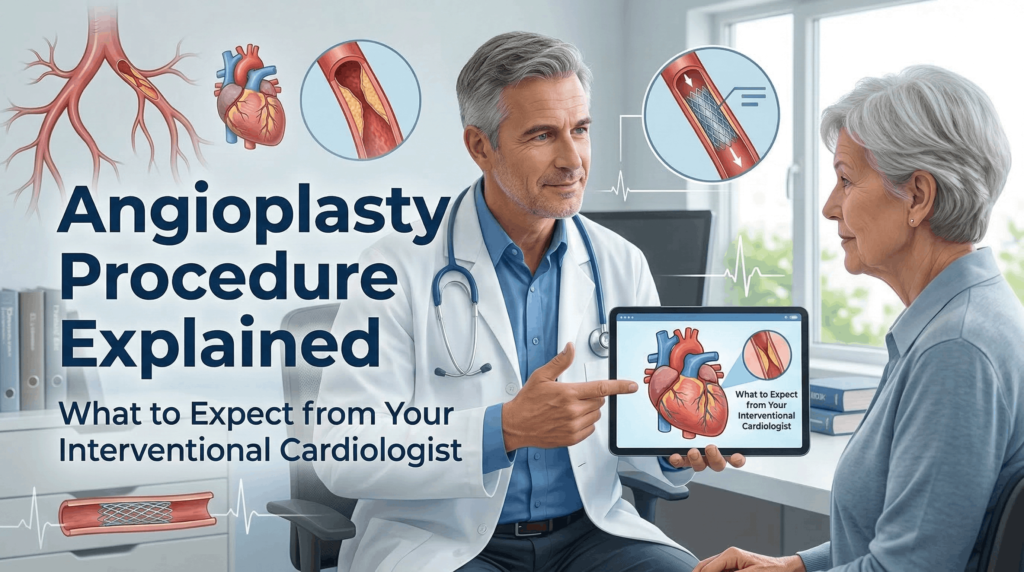
Heart disease remains one of the leading causes of death worldwide, and India has seen a significant rise in cardiac conditions over the past decade. Blocked arteries can reduce blood flow to the heart, increasing the risk of chest pain, heart attacks, and other life-threatening complications.
Fortunately, modern cardiology offers highly effective treatments to restore blood flow to the heart. One of the most common and successful procedures is angioplasty.
In this guide, Dr. Col. Ajay Bahadur, an experienced interventional cardiologist in India, explains what the Angioplasty Procedure involves, who needs it, how it is performed, and what patients can expect during recovery.
Understanding the process can help patients feel more confident and prepared if their doctor recommends this life-saving treatment.
What is Angioplasty?
Angioplasty, also known as coronary angioplasty or percutaneous coronary intervention (PCI), is a minimally invasive procedure used to open blocked or narrowed coronary arteries.
These arteries supply oxygen-rich blood to the heart muscle. When plaque (fat, cholesterol, and calcium deposits) builds up inside the arteries, it restricts blood flow.
During the angioplasty procedure, a cardiologist inserts a small balloon into the blocked artery and inflates it to widen the artery and restore proper blood flow.
In many cases, a stent (a small metal mesh tube) is placed in the artery to keep it open permanently.
When is Angioplasty Needed?
Doctors may recommend angioplasty if a patient has significant blockage in the coronary arteries.
Common conditions requiring angioplasty include:
Coronary Artery Disease (CAD)
Plaque buildup narrows arteries and reduces blood flow to the heart.
Heart Attack
Emergency angioplasty is often performed to quickly restore blood flow and limit heart damage.
Severe Chest Pain (Angina)
Patients experiencing persistent chest pain due to reduced blood flow may benefit from angioplasty.
High Risk of Heart Complications
If diagnostic tests reveal critical artery blockage, angioplasty may be recommended to prevent future heart attacks.
Symptoms That May Indicate Blocked Heart Arteries
Blocked arteries often develop gradually and may not cause symptoms initially. However, common warning signs include:
-
Chest pain or pressure (angina)
-
Shortness of breath
-
Pain in the arms, neck, or jaw
-
Fatigue during physical activity
-
Irregular heartbeat
-
Dizziness or sweating
If you experience these symptoms, your cardiologist may recommend diagnostic tests such as ECG, echocardiography, or coronary angiography to evaluate the condition of your heart.
Types of Angioplasty Procedures
There are several types of angioplasty depending on the patient’s condition.
| Type | Description |
|---|---|
| Balloon Angioplasty | A balloon catheter opens the blocked artery |
| Stent Angioplasty | A stent is inserted to keep the artery open |
| Drug-Eluting Stent | Stent coated with medication to prevent re-blockage |
| Primary Angioplasty | Emergency angioplasty during a heart attack |
Most patients today receive drug-eluting stents, which significantly reduce the risk of artery re-narrowing.
How the Angioplasty Procedure is Performed
The angioplasty procedure is performed in a specialized cardiac catheterization laboratory (Cath Lab).
Step 1: Preparation
The patient is given local anesthesia and mild sedation to ensure comfort during the procedure.
A small puncture is made in the wrist (radial artery) or groin (femoral artery).
Step 2: Catheter Insertion
A thin flexible tube called a catheter is inserted into the artery and guided toward the heart using real-time X-ray imaging.
Step 3: Balloon Inflation
A small balloon attached to the catheter is positioned at the blocked artery.
The balloon is inflated briefly to compress plaque against the artery walls and widen the blood vessel.
Step 4: Stent Placement
In most cases, a stent is placed to keep the artery open and maintain proper blood flow.
Step 5: Completion of Procedure
The balloon and catheter are removed once blood flow is restored. The entire procedure usually takes 30 minutes to 1 hour.
Benefits of Angioplasty
Angioplasty offers several advantages compared to open-heart surgery.
Minimally Invasive
No large surgical incision is required.
Faster Recovery
Most patients return home within 24–48 hours.
Immediate Relief
Patients often experience quick relief from chest pain and improved blood circulation.
Life-Saving in Emergencies
Primary angioplasty during a heart attack can save heart muscle and improve survival.
Risks and Possible Complications
Although angioplasty is generally safe, like any medical procedure it carries some risks.
Possible complications include:
-
Bleeding at the catheter insertion site
-
Blood clots in the stent
-
Artery damage
-
Allergic reaction to contrast dye
-
Re-narrowing of the artery (rare with modern stents)
An experienced interventional cardiologist carefully monitors patients to minimize these risks.
Recovery After Angioplasty
Recovery after angioplasty is usually quick, but proper care is essential for long-term heart health.
Hospital Stay
Most patients stay in the hospital for 1–2 days after the procedure.
Medications
Patients are prescribed medications such as:
-
Blood thinners
-
Cholesterol-lowering drugs
-
Blood pressure medications
These help prevent future blockages.
Lifestyle Changes
Adopting heart-healthy habits is crucial after angioplasty.
Important lifestyle changes include:
-
Eating a balanced heart-healthy diet
-
Exercising regularly
-
Quitting smoking
-
Managing stress
-
Controlling diabetes and blood pressure
Regular follow-ups with your cardiologist are also important.
When to Contact Your Doctor After Angioplasty
Seek medical attention immediately if you experience:
-
Severe chest pain
-
Shortness of breath
-
Excessive bleeding at the catheter site
-
Swelling or infection near the puncture area
-
Sudden dizziness or fainting
Early evaluation helps prevent complications.
Why Choose an Experienced Interventional Cardiologist?
Angioplasty requires precision, expertise, and advanced technology. Choosing a skilled cardiologist significantly improves the safety and success of the procedure.
Dr. Col. Ajay Bahadur is a highly experienced interventional cardiologist in India, known for performing advanced cardiac procedures and providing patient-centered heart care.
With extensive experience in angioplasty and coronary interventions, he focuses on delivering safe, effective treatments and helping patients achieve long-term heart health.
Frequently Asked Questions
Is angioplasty a major surgery?
No. Angioplasty is a minimally invasive procedure performed through a small catheter inserted into an artery.
How long does angioplasty take?
The procedure typically takes 30 minutes to one hour, depending on the complexity of the blockage.
Is angioplasty painful?
Patients usually experience minimal discomfort because the procedure is performed under local anesthesia and mild sedation.
How long does recovery take after angioplasty?
Most patients recover within a few days to one week, although heavy activities should be avoided for some time.
Can arteries block again after angioplasty?
There is a small risk of re-narrowing, but modern drug-eluting stents significantly reduce this risk.
Is angioplasty safe?
Yes. When performed by an experienced interventional cardiologist, angioplasty is considered a safe and highly effective treatment.
Conclusion
The angioplasty procedure has transformed the treatment of coronary artery disease and heart attacks. By restoring blood flow to the heart quickly and effectively, angioplasty can relieve symptoms, prevent complications, and save lives.
Understanding the procedure helps patients feel more confident and prepared for treatment.
If you or a loved one has symptoms of blocked arteries or heart disease, consult an experienced specialist. Dr. Col. Ajay Bahadur, a trusted interventional cardiologist in India, provides expert diagnosis and advanced cardiac care to help patients maintain a healthy heart and active life.
