
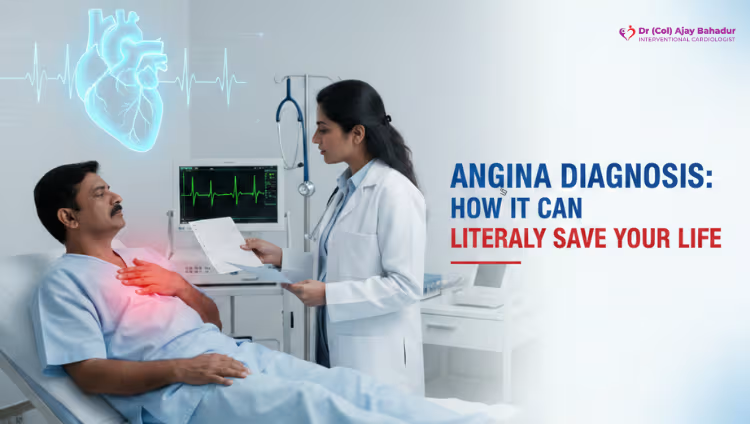
How Angina Diagnosis Can Save Your Life
Posted By Dr. Ajay Bahadur – Cardiologist in Lucknow
Let’s be clear from the start — angina is not a disease. It is a warning sign. Your heart is telling you something is wrong. And if you listen, you can save your life.
Most people read about angina, take their medicines, and think they are fine. But there is a lot more you need to understand. This article will explain it in simple words.
What Is Angina, Really?
Angina means your heart is not getting enough oxygen. You feel chest pain or discomfort because of this. It usually happens because the arteries supplying blood to your heart are partially blocked.
But here is the important part — the moment you are diagnosed with angina, you are already in a higher risk group for heart attack. Even if your tests look “okay” or your pain is mild.
This is not said to scare you. It is said, so you take it seriously.
Stable vs Unstable Angina — And the Danger in Between
Stable angina is when chest pain comes predictably — like during exercise or stress — and goes away with rest. Unstable angina is a medical emergency.
But many patients fall in the middle. Their pain slowly becomes more frequent. It starts happening with less effort. Recovery takes longer. This slow change is dangerous because people often ignore it.
What is actually happening inside? The plaque in your arteries gets unstable. Small cracks form. Tiny clots keep forming and dissolving. You do not feel this happening. But one day, a complete blockage can occur — leading to a massive heart attack.
Early diagnosis gives you a chance to stop this before it reaches that point.
Your Medicines Do More Than Relieve Pain
Nitrates remove the pain fast. Beta-blockers reduce the workload on your heart. Statins lower cholesterol. Blood thinners prevent clots.
But here is something most people miss — pain relief does not mean the disease is under control. Your symptoms can disappear completely while plaque continues to grow inside your arteries. This can give false confidence.
Statins only protect you if your cholesterol is brought down to a strict target — not just an “average” level. Average is not safe when you have been diagnosed with angina.
Are Stents a Cure?
Stents open blocked arteries and improve blood flow. They work very well for relieving symptoms. But in stable angina, stents improve your quality of life more than they guarantee survival.
What really matters is the nature of the plaque — not just how much it is blocking. A soft, inflamed plaque is more dangerous than a hard, stable one — even if it is smaller. Advanced tests like CT Coronary Angiography can help understand this better.
Silent Angina — When You Feel Nothing
This is one of the most dangerous situations. Some people, especially those with diabetes, elderly patients, and women, do not feel the classic chest pain. Instead they may feel unusual tiredness, breathlessness, jaw pain, back discomfort, or nothing at all.
Their heart can still be getting damaged silently. This is called silent ischemia. It can lead to sudden cardiac death without any warning.
Diagnosis and regular monitoring saves lives in these cases — not pain management, but awareness.
Exercise Is Good — But Must Be Planned
Yes, exercise helps the heart. But it also increases the heart’s demand for oxygen. If angina is not well managed, the wrong kind of exercise can trigger a dangerous episode.
After diagnosis, you need a stress test to understand your safe limits. Exercise should start slowly and increase gradually under medical guidance. Going to the gym and pushing hard without medical clearance is risky. But sitting completely still is also harmful. The right balance needs to come from your doctor.
What Many Doctors Do Not Discuss — Microvascular Angina
Some patients have all the symptoms of angina, but their angiography looks completely normal. This is called microvascular angina — a problem in the tiny blood vessels of the heart.
Stents cannot fix this. These patients are often told it is anxiety. But the risk is real and requires specific treatment — strict risk-factor control, vasodilators, and long-term monitoring.
If you have ongoing chest pain despite normal tests, ask your doctor specifically about this.
Inflammation Is the Real Enemy
People blame cholesterol. But most heart attacks happen because inflamed plaque ruptures — not because of the size of the blockage.
Poor sleep, uncontrolled diabetes, smoking, chronic stress, and untreated infections all increase inflammation. Even after a stent, a high inflammatory state keeps you at risk.
Angina is not a plumbing problem you fix once. It is a long-term condition that needs continuous management.
What Happens If You Ignore It
If angina is ignored or only partially managed, over the next 5 to 10 years you will likely face repeated hospital visits, worsening artery blockages, reduced heart pumping capacity, and eventually heart failure.
If it is properly managed, plaque stabilizes, heart function is preserved, and your risk of a heart attack drops significantly.
The difference is not luck. It is what you do after diagnosis.
A Simple Framework to Think About Your Care
Think of your treatment in five layers. The first is controlling symptoms. The second is stabilizing the plaque. The third is reducing inflammation. The fourth is checking for any structural heart issues. The fifth is making healthy lifestyle changes you can maintain long-term.
Most patients only work on the first layer. Saving your life means working through all five.
Frequently Asked Questions
1. Can angina go away on its own?
The chest pain may reduce with rest or medication, but the underlying blockage does not go away on its own. Without treatment, the disease continues to progress quietly. Medical management is always needed.
2. If I got a stent, am I cured?
No. A stent opens the blocked artery and relieves symptoms, but it does not cure coronary artery disease. You still need lifelong medication, lifestyle changes, and regular follow-ups to prevent future events.
3. Is angina the same as a heart attack?
No, but angina is a serious warning that a heart attack can happen. In angina, blood flow is reduced but not completely blocked. In a heart attack, the artery is completely blocked and the heart muscle begins to die.
4. Can young people get angina?
Yes, especially with risk factors like diabetes, high blood pressure, smoking, obesity, or a family history of heart disease. Angina is becoming more common in people.
Talk to a Heart Specialist in Lucknow — Dr. Ajay Bhadur
If you or someone in your family has been diagnosed with angina, or if you have been experiencing chest discomfort, breathlessness, or unusual fatigue, do not wait.
Dr. Ajay Bhadur is a trusted and experienced heart specialist in Lucknow with expertise in diagnosing and managing coronary artery disease, angina, and complex heart conditions. Whether you need a second opinion, advanced cardiac testing, or a long-term heart care plan, Dr. Bhadur and his team are here to help.
Your heart health is too important to leave to chance.
Book your consultation with Dr. Ajay Bhadur today and take the first step toward a stronger, safer heart.
