
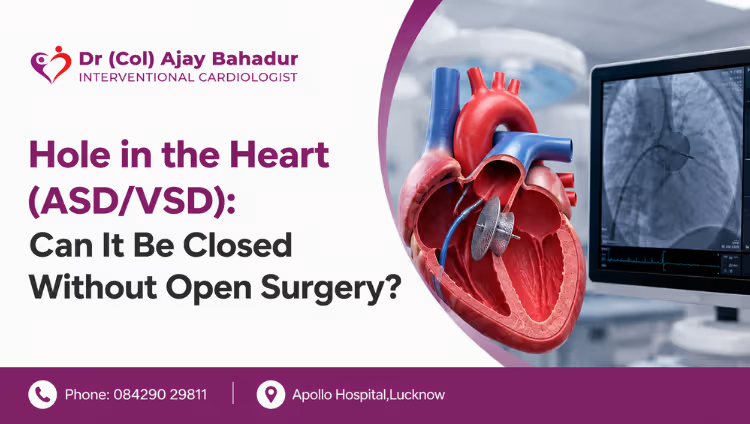
Many ASDs (Atrial Septal Defects) and specific types of VSDs (Ventricular Septal Defects) can now be closed without open-heart surgery using minimally invasive catheter-based device closure. This procedure involves inserting a tiny device through a blood vessel in the groin. While highly effective and offering faster recovery, eligibility depends on the hole’s size, location, and the patient’s overall heart anatomy, requiring a specialist evaluation.
Hearing the words “hole in the heart” can be overwhelming for any patient or parent. It sounds like a life-threatening emergency that requires major surgery.
However, modern cardiology has transformed how we treat these conditions. Today, many patients do not need their chest opened to fix a heart defect.
As a dedicated professional and the Best Cardiologist in Lucknow, my goal is to guide you through these modern options with clarity and care.
In this guide, we will explore how ASD and VSD are treated today, focusing on the revolutionary “device closure” that avoids the need for a scalpel in many cases.
What Does “Hole in the Heart” Mean?
The heart is a pump divided into four chambers. To keep the blood moving in the right direction, there are walls (called septa) between the left and right sides.
A “hole in the heart” is a congenital heart defect, meaning it is present from birth. It occurs when these walls do not close completely during fetal development.
When there is a hole, oxygen-rich blood from the left side leaks back into the right side. This forces the heart and lungs to work much harder than they should.
Over time, this extra workload can lead to heart enlargement, high blood pressure in the lungs (pulmonary hypertension), and even heart failure if left untreated.
What Is ASD and What Is VSD?
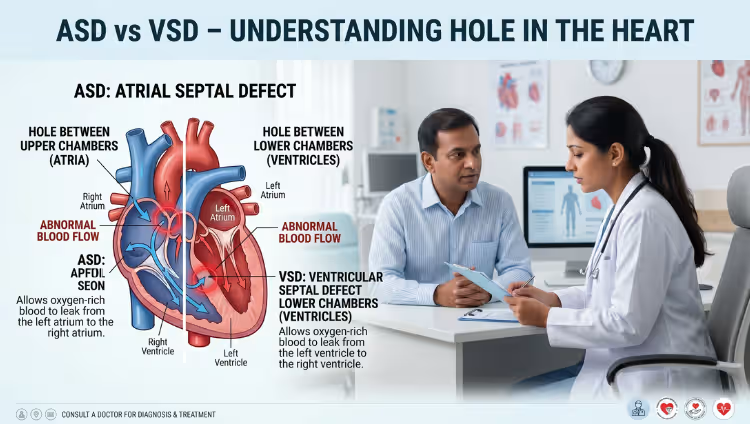
There are two main types of holes in the heart, named after where they are located.
Atrial Septal Defect (ASD)
An ASD is a hole in the wall (atrium) between the two upper chambers of the heart. These are very common and are often discovered in adulthood because they may not cause symptoms for years.
Ventricular Septal Defect (VSD)
A VSD is a hole in the wall (ventricle) between the two lower chambers. Because the lower chambers pump at higher pressure, a VSD often causes symptoms earlier in life, such as poor growth or breathing difficulties in infants.
Can ASD and VSD close on their own?
Yes, in many cases—especially in infants—small holes can close naturally as the child grows. However, if the hole is large or causes strain on the heart, medical intervention becomes necessary.
Common Symptoms of ASD and VSD in Adults
Many adults live for decades without knowing they have a heart defect. However, as the heart works harder over time, symptoms begin to surface.
Common signs to watch for include:
-
Breathlessness: Especially during exercise or physical activity.
-
Fatigue: Feeling unusually tired even after a full night’s sleep.
-
Palpitations: A feeling that your heart is skipping a beat or racing.
-
Swelling: Fluid buildup in the legs, feet, or abdomen.
-
Frequent Infections: Recurring lung infections like pneumonia or bronchitis.
If you experience these, consulting the Best Heart specialist in Lucknow for an echocardiogram (heart ultrasound) is the first step toward a solution.
ASD/VSD Treatment Options Comparison Chart
To help you understand the difference between traditional surgery and modern methods, look at the table below:
| Treatment Feature | Open-Heart Surgery | Device Closure (Non-Surgical) |
| Incision | Large incision through the chest/sternum | Small puncture in the groin (leg) |
| Recovery Time | 4 to 8 weeks | 2 to 5 days |
| Hospital Stay | 5 to 7 days | 1 to 2 days |
| Anesthesia | General Anesthesia | Local Anesthesia or Sedation |
| Visible Scar | Large vertical chest scar | No visible scar (just a tiny dot) |
| Ideal For | Very large or complex holes | Most ASDs and specific VSDs |
Modern medicine prioritizes “minimally invasive” options whenever possible to reduce patient trauma and speed up the return to normal life.
Can ASD Closure Be Done Without Open Surgery?
The short answer is: Yes, for the majority of patients.
Catheter-based ASD closure is now the “gold standard” for most secundum-type ASDs (the most common type). Instead of opening the chest, the cardiologist uses a thin, flexible tube called a catheter.
How the Device Works
The catheter is inserted into a vein in the leg and guided to the heart. Inside the catheter is a folded “closure device” (often looking like two tiny umbrellas joined together).
Once the catheter reaches the hole, the specialist deploys the device. It expands to “sandwich” the hole, sealing it instantly. Over the next few months, your own heart tissue grows over the device, making it a permanent part of your heart.
Can ASD be closed without surgery? Yes, and it has changed the lives of thousands of patients who previously feared the risks of major operations.
When Is Open Heart Surgery Still Needed?
While device closure is amazing, it is not for everyone. Surgery remains the safest and most effective option in the following scenarios:
-
Hole Size: If the hole is excessively large, there may not be enough “rim” or tissue for the device to grip onto.
-
Location: Holes located too close to the heart valves or the edges of the heart wall usually require surgical stitches.
-
Multiple Defects: If a patient has multiple holes or associated valve problems.
-
Complex Anatomy: “Sinus venosus” or “Primum” types of ASDs almost always require surgery.
If you are wondering, “Can you repair a heart valve without open-heart surgery?”—the answer is sometimes yes, via TAVR or MitraClip, but for complex structural cases, surgery is still the most reliable path.
Procedure to Close Hole in Heart in Adults
If you are scheduled for a device closure, here is what the step-by-step “Procedure to close hole in heart in adults” looks like:
Phase 1: The Diagnosis
We start with a Transesophageal Echocardiogram (TEE). This is a detailed ultrasound where a small probe is passed down the esophagus to get a crystal-clear view of the hole’s size and location.
Phase 2: The Procedure
You are brought to the Cardiac Catheterization Lab (Cath Lab). Under sedation, the specialist inserts the catheter through the femoral vein in the groin. Using X-ray imaging, the device is positioned and released.
Phase 3: The Observation
Most patients stay in the hospital overnight just to ensure the device is perfectly positioned and there is no bleeding at the entry site.
Phase 4: Follow-up
You will return for check-ups and echoes at 1 month, 6 months, and 1 year to ensure the heart is remodeling correctly.
Recovery After ASD/VSD Closure
One of the biggest concerns for patients, especially those “after ASD surgery at the age of 40,” is how long it will take to get back to work.
Recovery Timeline:
-
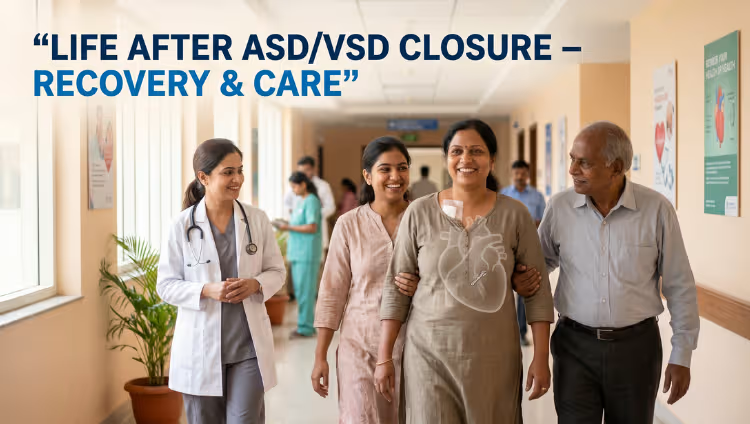
Days 1–2: Most patients are discharged and can walk around.
-
Week 1: You can perform light activities like walking and light desk work.
-
Week 4: Most patients are cleared for full activity, including exercise.
-
6 Months: The heart tissue has usually fully covered the device.
Life expectancy after ASD repair is generally excellent. When the hole is closed before permanent damage to the lungs occurs, most patients enjoy a normal, full life expectancy.
Success Rate and Risks of ASD/VSD Closure
Is it safe? This is the question every family asks.
The hole in heart surgery success rate (specifically for device closure) is over 98% in experienced hands. It is considered one of the safest procedures in structural cardiology.
Potential Risks:
-
Minor Bruising: At the leg entry site.
-
Arrhythmia: A temporary irregular heartbeat as the heart adjusts to the device.
-
Device Displacement: Extremely rare with modern imaging.
Choosing an experienced cardiologist, like the Best Heart doctor in Lucknow, ensures that these risks are minimized through precise pre-procedure planning.
A Patient’s Journey: Reassurance for the Family
I remember a 38-year-old patient who came to me complaining of extreme exhaustion. She was a mother of two and thought her fatigue was just “part of getting older.”
Upon evaluation, we found a large ASD. She was terrified of open-heart surgery. When I told her we could fix it via a 45-minute procedure through her leg, her relief was palpable.
Two days later, she was home. Three weeks later, she called to say she had more energy than she’d had in a decade. This is the power of modern cardiac care—it doesn’t just save lives; it restores the quality of life.
How to Choose the Right Heart Specialist for ASD/VSD Treatment
When it comes to your heart, you shouldn’t settle. Here is what to look for:
-
Expertise: Does the doctor specialize in “Structural Heart Disease”?
-
Technology: Does the hospital have a high-tech Cath Lab and 3D Echo?
-
Patient Success Stories: Look for a specialist with a proven track record of successful device closures.
-
Comprehensive Care: A doctor who explains the “why” and “how” rather than just the “how much.”
For those in Uttar Pradesh, seeking the Best Heart specialist in Lucknow ensures you have access to world-class facilities without traveling to a different metro city.
Frequently Asked Questions
1. Can ASD closure be done without surgery?
Yes, most secundum ASDs are closed using a catheter-based device, avoiding the need for a chest incision.
2. Can ASD and VSD close on their own?
Small holes often close in early childhood. However, holes that remain open past age 5 or 6 usually require a procedure.
3. What is the procedure to close a hole in the heart in adults?
It is a catheterization procedure where a specialist guides a closure device to the heart through a vein in the leg.
4. What are the types of ASD closure devices?
The most common are the Amplatzer Septal Occluder and the Gore Cardioform, both made of skin-friendly materials like Nitinol.
5. What is the recovery time after ASD surgery?
For device closure, recovery is 2–5 days. For open-heart surgery, it is 6–8 weeks.
6. What is life expectancy after ASD repair?
If treated timely, life expectancy is near-normal. Early closure prevents heart failure and pulmonary hypertension.
7. How risky is ASD closure?
The procedure is very safe, with a complication rate of less than 1–2% in specialized centers.
8. What is the success rate of heart hole surgery?
Both device closure and surgical repair have success rates exceeding 98%.
9. Can heart valve repair be done without open-heart surgery?
Yes, certain valve conditions can be treated with catheter-based techniques (like TAVI or MitraClip), depending on the patient’s suitability.
10. Is ASD treatment safe after age 40?
Absolutely. In fact, many ASDs are only caught at age 40 or later. Closing them even in later life significantly improves symptoms and survival.
Final Thoughts: A Message of Hope
Modern heart care has made it possible for many ASD and VSD patients to receive treatment without major open-heart surgery. The fear of a “hole in the heart” should no longer be a shadow over your life. With early diagnosis and expert evaluation, recovery is fast, and the future is bright.
If you or a loved one has been diagnosed with a heart defect, don’t wait for symptoms to worsen.
Consult Dr. Ajay Bahadur, a trusted Best Heart specialist in Lucknow, for advanced heart defect evaluation and minimally invasive treatment options. Let’s protect your heart together.