
A Real Case Study: How We Saved a Heart Attack Patient
When it comes to the human heart, every single second is a battle against time. In the medical community, we have a very famous saying: “Time is Muscle.” This means that for every minute a heart attack goes untreated, more of the heart’s muscle dies. Once that muscle is gone, it cannot be brought back.
Today, we are going to walk you through a real-life story—a case study of a 55-year-old gentleman from Lucknow who came to us on the brink of disaster. This story is a perfect example of why having access to the Best Cardiologist in Lucknow and knowing the signs of a heart attack can save a life.
If you live in a busy city like Lucknow, understanding the journey from the first chest pain to the final recovery is essential for you and your family.
The Morning That Changed Everything: Meet Mr. Rajesh
Mr. Rajesh (name changed for privacy) is a hardworking man living in the heart of Gomti Nagar, Lucknow. He has a desk job, loves his evening snacks, and, like many of us, has a bit of a stressful lifestyle. He never thought a heart attack would happen to him.
It was a Tuesday morning, around 3:30 AM. Rajesh woke up feeling a strange burning sensation in his upper stomach and chest.
The Dangerous “Gas” Myth
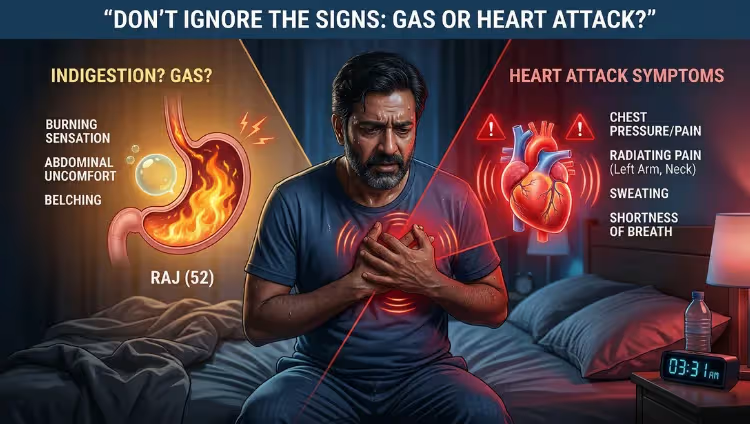
Like 80% of patients in India, Rajesh’s first thought was, “It’s just acidity.” He had eaten a heavy dinner at a wedding the night before, so he took an antacid and tried to pace around the room. But the pain didn’t go away. Instead, it grew. It turned from a “burn” into a “crushing weight.”
By 4:00 AM, he was sweating heavily, even though the fan was at full speed. This is the moment his wife realized they didn’t need a digestive syrup—they needed a heart doctor in Lucknow.
Warning Signs You Should Never Ignore:
-
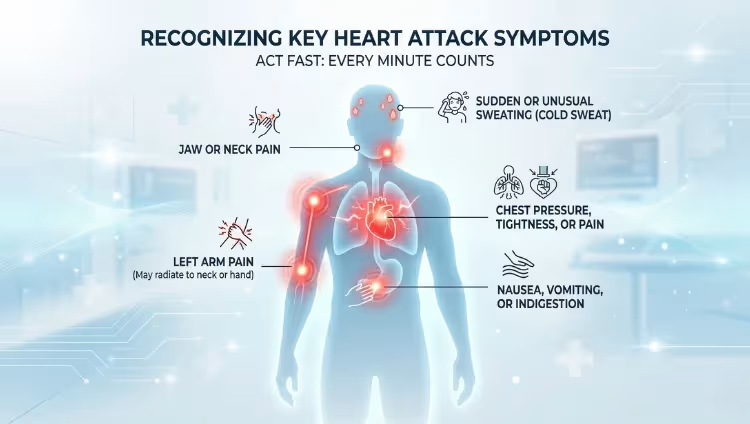
Heavy Pressure: Feeling like an elephant is sitting on your chest.
-
Radiating Pain: Pain that starts in the chest and moves to the left arm, neck, or jaw.
-
Cold Sweats: Sudden, unexplained sweating (this is a major red flag).
-
Nausea: Feeling like you want to vomit along with chest discomfort.
-
Shortness of Breath: Feeling like you can’t get enough air, even while sitting still.
The Critical Transition: The Journey to the Hospital
The biggest challenge in Lucknow is often the traffic and the distance to a good hospital. Fortunately, Rajesh’s family didn’t waste time. They didn’t call friends for advice; they called for an ambulance.
What they did right during the journey:
-
Aspirin: They had a 300mg Aspirin tablet at home. On the advice of a doctor over the phone, Rajesh chewed it. This helped prevent the blood clot in his heart from getting even larger.
-
Positioning: They kept him sitting up. Lying flat can sometimes make breathing harder during a heart attack.
-
Calmness: While it is hard, staying calm helps keep the heart rate lower.
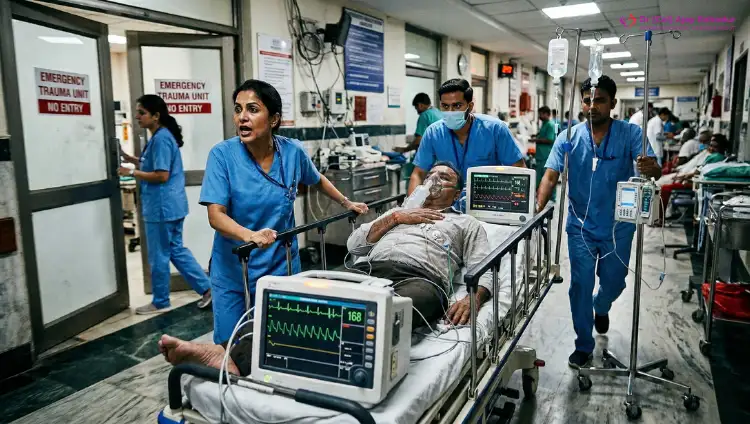
By the time the ambulance reached our facility, Rajesh’s condition was worsening. His blood pressure was dropping, and he was losing consciousness.
Step 1: Emergency Diagnosis by the Heart Specialist in Lucknow
As soon as the stretcher rolled into the Emergency Room (ER), our team swung into action. In a heart emergency, we follow a strict protocol. You don’t just need any doctor; you need an experienced heart specialist in Lucknow who can read the subtle signs of a failing heart.
The Immediate Tests:
-
The 12-Lead ECG: This is the gold standard. Within 2 minutes, the ECG showed a “STEMI” (ST-Elevation Myocardial Infarction). This is the most serious type of heart attack, where the main artery is completely blocked.
-
Cardiac Biomarkers (Troponin Test): We took a quick blood sample to see if the heart muscle was releasing enzymes that indicate damage.
-
Point-of-Care Echocardiogram: A quick ultrasound to see which part of the heart had stopped pumping.
The diagnosis was confirmed: Rajesh had a 100% blockage in his Left Anterior Descending (LAD) artery—often called the “Widow Maker” because it is the most important artery in the heart.
Step 2: Entering the Cath Lab with an Interventional Cardiologist
This is where science meets precision. A regular doctor can give medicines, but a 100% blockage requires an Interventional Cardiologist.
An Interventional Cardiologist is a doctor who has special training in using tiny tubes (catheters) to clear blockages without performing “open-heart” surgery. This is done in a high-tech room called a Cath Lab.
Why the Cath Lab is Important:
Lucknow now has some of the most advanced Cath Labs in India. These rooms are equipped with high-definition X-ray machines that allow the doctor to see the inside of your arteries in real-time. Without a Cath Lab, treating a major heart attack is almost impossible.
Step 3: The Life-Saving Procedure (Primary Angioplasty)
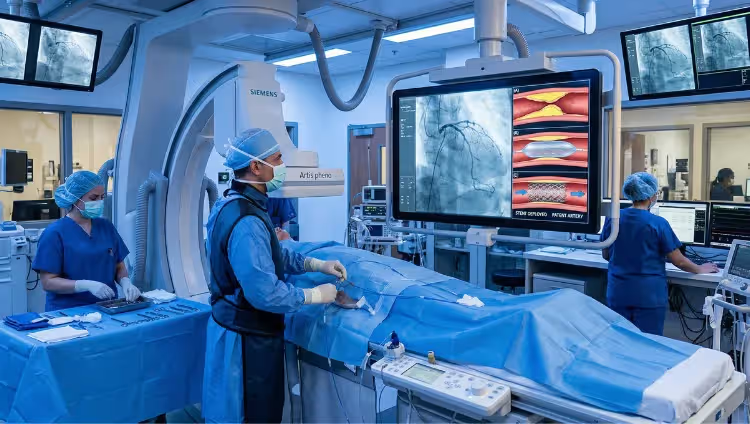
We took Rajesh to the Cath Lab immediately. The procedure we performed is called “Primary Angioplasty.” Here is the step-by-step process of how we saved his life:
-
Local Anesthesia: We didn’t need to put Rajesh to sleep. We just numbed his right wrist (the radial approach). This is safer and allows for faster recovery.
-
The Catheter Insertion: The Interventional Cardiologist inserted a very thin, flexible tube through the wrist and guided it all the way to the heart.
-
Angiography (The Map): We injected a special dye. On the monitor, we saw the “roadblock.” The blood flow to the front of Rajesh’s heart had completely stopped.
-
The Balloon Expansion: We passed a tiny wire through the blockage and then a small balloon. When we inflated the balloon, it pushed the fatty “gunk” (plaque) against the walls of the artery.
-
The Stent Placement: To make sure the artery didn’t collapse again, we placed a “Drug-Eluting Stent” (a small metal mesh tube). This stent stays in the heart forever and slowly releases medicine to keep the area clear.
-
Restored Flow: Within 20 minutes of entering the room, Rajesh’s blood flow was back to 100%. He looked at the monitor and said, “The pain is gone.”
Step 4: Recovery and Post-Operative Care
Saving the life is the first part; keeping the patient healthy is the second part. Rajesh stayed in the Cardiac ICU for 48 hours for monitoring.
Because we used the wrist approach (Radial Angioplasty), he was able to sit up and eat a meal just 4 hours after the procedure. This is the benefit of seeing the Best Cardiologist in Lucknow—we use the latest techniques to ensure the patient’s comfort.
The New Lifestyle Plan:
To prevent another heart attack, we gave Rajesh a “Heart Success Plan”:
-
Medication Adherence: He must take blood thinners and cholesterol medicine regularly.
-
Dietary Shifts: Replacing heavy oil and “Lucknowi Biryani” with grilled proteins, fiber-rich grains, and plenty of vegetables.
-
Walking: Starting with 10 minutes a day and moving up to 30 minutes of brisk walking.
-
Stress Management: Learning to say “no” at work and prioritizing sleep.
Common Myths vs. Facts About Heart Care in Lucknow
As a heart doctor in Lucknow, I hear many myths. Let’s clear some up:
| Myth | Fact |
| “I am too young for a heart attack.” | We are now seeing patients as young as 25 in Lucknow due to vaping, stress, and poor diet. |
| “Chest pain is always a heart attack.” | Not always, but it is better to be safe than sorry. Always get an ECG. |
| “Angioplasty is very dangerous.” | In the hands of a skilled Interventional Cardiologist, the risk is extremely low (less than 1%). |
| “I will need bed rest for months.” | Most patients return to light work within a week after a stent. |
How to Choose the Best Cardiologist in Lucknow?
If you or a family member has heart symptoms, you cannot afford to go to someone without the right expertise. Here is what to look for:
-
DM Cardiology Qualification: Ensure your doctor has the highest degree in heart care.
-
24/7 Availability: Heart attacks don’t happen during office hours. The hospital must have a 24/7 emergency team.
-
Modern Infrastructure: Look for a hospital with a modern Cath Lab and an Intensive Cardiac Care Unit (ICCU).
-
The “Human” Touch: The Best Cardiologist in Lucknow listens to you and explains the procedure in simple language, just like we are doing now.
Frequently Asked Questions
1. What is the difference between a heart attack and a cardiac arrest?
A heart attack is a “plumbing problem” where a pipe (artery) is blocked. A cardiac arrest is an “electrical problem” where the heart suddenly stops beating. A heart attack can lead to cardiac arrest if not treated by a heart doctor in lucknow quickly.
2. Is a stent better than bypass surgery?
It depends on the number of blockages. For a single or double blockage, a stent (angioplasty) is usually preferred because it is non-surgical. For multiple blockages in all three arteries, bypass surgery might be better. Your Interventional Cardiologist will decide based on your Angiography report.
3. Can I drive after getting a stent?
Usually, you can start driving within a week. However, if you had a major heart attack like Rajesh, your doctor might ask you to wait 2-3 weeks until your heart function improves.
4. Why is Lucknow seeing an increase in heart patients?
The combination of a sedentary lifestyle, high-salt diet (fast food), rising pollution levels, and genetic factors makes people in this region more prone to heart disease.
5. How much does an emergency angioplasty cost in Lucknow?
The cost depends on the type of stent used and the hospital stay. However, heart care in Lucknow is much more affordable than in Delhi or Gurgaon, while maintaining the same international standards.
6. What should I do if I’m alone and feel heart attack symptoms?
-
Call an emergency number immediately.
-
Chew an Aspirin.
-
Keep your front door unlocked so help can get in.
-
Do NOT try to drive yourself to the hospital.
7. Does a stent ever need to be replaced?
Modern stents are permanent. They don’t have an “expiry date.” However, if a patient doesn’t take their medicine or continues to smoke, a new blockage can form inside or near the old stent.
8. Who is the Best Cardiologist in Lucknow for elderly patients?
Elderly patients need a doctor who understands “comorbidities” like sugar and BP. Look for an Interventional Cardiologist who has experience treating patients over the age of 70 with minimally invasive techniques.
Conclusion: A Second Chance at Life
Mr. Rajesh is now back at home. He enjoys morning walks in Janeshwar Mishra Park and has never felt better. His story had a happy ending because his family acted fast, and they found the right heart specialist in Lucknow at the right time.
Don’t wait for a “warning shot.” Heart health is about prevention and quick action. If you have high blood pressure, diabetes, or a family history of heart disease, it’s time to get a check-up.
Take Control of Your Heart Health Today!
Are you looking for the Best Cardiologist in Lucknow? Our clinic offers state-of-the-art diagnostic tools and life-saving treatments for all heart conditions. Whether it’s a routine check-up, an ECG, or a consultation with a top Interventional Cardiologist, we are here for you.
Don’t ignore the signs. Your heart works hard for you—give it the care it deserves.
📞 Call us now to book an appointment: [84290 29811]
🌐 Visit our website: [https://www.drajaybahadur.com/]
📍 Location: [Apollomedics Super Speciality Hospitals], Lucknow.
Expert Care. Advanced Technology. A Heart That Cares for Yours.