
Posted By Dr Ajay Bahadur | Best Cardiologist in Lucknow
Heart disease is one of the leading causes of death in India — and in cities like Lucknow, the numbers are rising. What makes it especially dangerous is that it often develops silently, without obvious warning signs. A person may feel completely healthy for years while coronary artery disease slowly builds inside their arteries.
The encouraging news is that with the right cardiac tests performed at the right time, many heart problems can be detected early — often before a heart attack occurs. Early detection allows doctors to begin treatment, reduce long-term risk, and help patients maintain a healthier life.
This guide explains the essential heart tests, what each one checks, and when you should consider consulting a cardiologist.
Why Early Detection of Heart Problems Is Important
Many people visit a cardiologist only after experiencing chest pain, breathlessness, or a serious cardiac event. Unfortunately, by that time the disease may already be advanced.
Coronary artery disease — the most common heart condition — develops slowly over decades. Fatty deposits known as plaque gradually accumulate inside the coronary arteries that supply blood to the heart muscle. For a long time, this process produces no symptoms. Eventually, plaque can rupture and trigger a heart attack.
Early detection helps identify these silent changes before they become life-threatening. With timely screening and appropriate cardiac tests, doctors can evaluate your risk level, recommend preventive lifestyle changes, and begin treatment if necessary.
Common Heart Tests Doctors Use
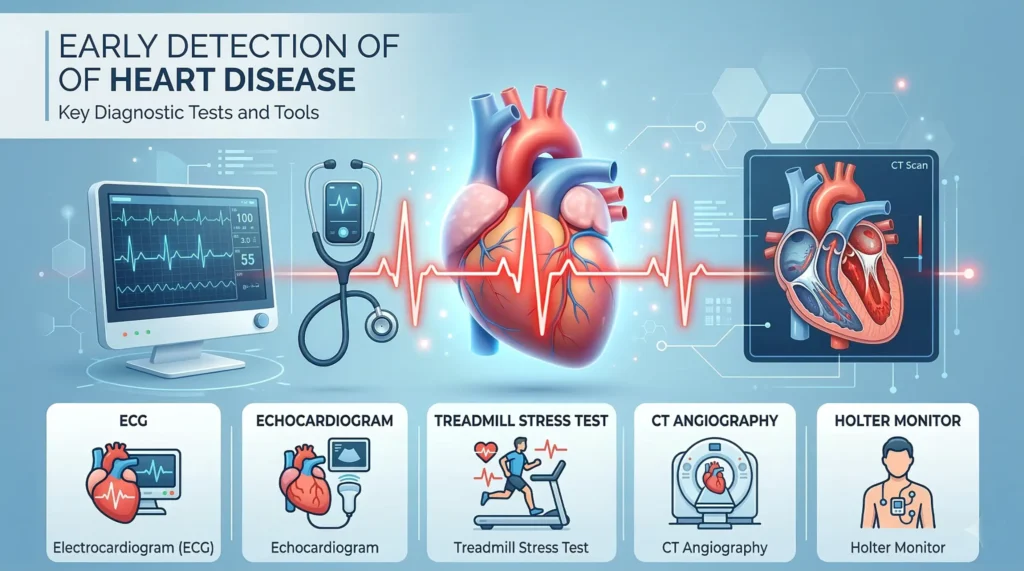
No single test provides a complete picture of heart health. Cardiologists typically recommend a combination of tests depending on symptoms, age, medical history, and risk factors.
Electrocardiogram (ECG or EKG)
An ECG records the electrical activity of the heart. It is quick, painless, and commonly used during routine evaluations.
Doctors use an ECG to detect abnormal heart rhythms (arrhythmias), evidence of previous heart attacks, and certain electrical abnormalities. However, a normal ECG does not always rule out coronary artery disease, especially if the patient has no symptoms at the time of testing.
Blood Tests
Several blood tests are used to evaluate heart health and cardiovascular risk.
Common tests include:
-
Cholesterol panel (LDL, HDL, triglycerides)
-
Troponin (detects heart muscle injury)
-
High-sensitivity C-reactive protein (hs-CRP), which indicates inflammation
-
Advanced markers such as ApoB and lipoprotein(a)
These tests help estimate cardiovascular risk but do not directly show the structure of the heart or arteries.
Echocardiogram (Echo)
An echocardiogram uses ultrasound waves to create detailed images of the heart.
This test allows doctors to evaluate:
-
Heart pumping function
-
Heart chamber size
-
Valve structure and performance
-
Fluid around the heart
It is one of the most widely used cardiac imaging tests. However, early coronary artery blockages may not be visible unless they have already affected heart muscle function.
Stress Test (TMT – Treadmill Test)
A stress test evaluates how the heart performs during physical exertion.
During the test, the patient walks on a treadmill while heart activity and blood pressure are monitored. The test can help identify reduced blood flow to the heart muscle.
However, stress tests generally detect blockages that are around 70% or greater. Smaller plaques or early disease may not appear on the test.
CT Coronary Angiography
CT coronary angiography is a non-invasive imaging scan that visualizes the coronary arteries directly.
It can detect:
-
Plaque buildup
-
Artery narrowing
-
Early coronary artery disease
This imaging test is increasingly recommended for patients who have moderate to high cardiovascular risk or inconclusive stress test results.
Traditional coronary angiography performed through catheterization may still be used when doctors need more detailed information or plan interventional treatment.
Holter Monitoring
A Holter monitor is a portable ECG device worn for 24–48 hours or sometimes longer.
It continuously records heart rhythm during normal daily activities and sleep. This test is particularly useful for detecting intermittent heart rhythm problems such as:
-
Occasional arrhythmias
-
Unexplained palpitations
-
Episodes of dizziness or fainting
Because it records heart activity over an extended period, it can identify abnormalities that a short ECG may miss.
Coronary Calcium Score (CT Calcium Scan)
A coronary calcium scan measures calcium deposits inside the coronary arteries.
Calcium in the arteries indicates that plaque is forming — often years before symptoms appear. A higher calcium score suggests a greater likelihood of coronary artery disease.
This test is especially helpful for individuals who have cardiovascular risk factors but no symptoms.
Heart Test Comparison Guide
| Heart Test | What It Detects | When Doctors Recommend It |
|---|---|---|
| ECG | Arrhythmias, rhythm problems, past heart attacks | Routine check-ups or chest pain |
| Blood Tests | Cholesterol, inflammation, heart damage markers | Baseline risk assessment |
| Echocardiogram | Heart muscle function, valves, chamber size | Breathlessness or suspected structural disease |
| Stress Test (TMT) | Reduced blood flow during exertion | Chest pain during activity |
| CT Coronary Angiography | Plaque buildup and artery blockages | High-risk patients |
| Holter Monitor | Intermittent arrhythmias | Palpitations or fainting |
| Coronary Calcium Scan | Early silent plaque formation | Preventive screening |
Which Tests Detect Heart Disease Early?
For detecting heart disease in its earliest stages, imaging tests that examine the arteries directly are particularly valuable.
Two tests are often used for early detection:
-
Coronary calcium scan
-
CT coronary angiography
These scans can reveal plaque formation long before symptoms develop.
Advanced blood markers such as ApoB and lipoprotein(a) may also uncover hidden cholesterol risks that traditional lipid panels sometimes miss.
Holter monitoring is useful for identifying intermittent rhythm disturbances that a short ECG might not detect.
The key point is that no single test provides a complete evaluation. Cardiologists determine the best combination of tests based on individual risk factors such as age, lifestyle, family history, and medical conditions.
Limitations of Heart Tests: What Patients Should Understand
Many people assume that a normal test result means their heart is completely healthy. Unfortunately, that is not always the case.
For example:
-
An ECG can appear normal even in patients with coronary artery blockages.
-
Stress tests may miss smaller plaques or early disease.
-
Cholesterol levels alone do not fully predict heart attack risk.
-
Calcium scans may not detect soft plaque in younger individuals.
Because of these limitations, doctors rely on a combination of medical history, risk assessment, and multiple tests to evaluate cardiovascular health.
Patients with diabetes, high blood pressure, obesity, or a strong family history of heart disease often require more detailed screening even if initial tests appear normal.
Symptoms, Possible Conditions, and Recommended Tests
| Common Symptom | Possible Heart Condition | Recommended Tests |
|---|---|---|
| Chest pain or pressure | Coronary artery disease, angina | ECG, stress test, CT angiography |
| Breathlessness during activity | Heart failure, valve disease | Echocardiogram, blood tests |
| Palpitations | Arrhythmia, atrial fibrillation | ECG, Holter monitor |
| Dizziness or fainting | Rhythm disorders | Holter monitor, echocardiogram |
| Unexplained fatigue | Cardiomyopathy or heart failure | Blood tests, echocardiogram |
| Swelling in legs or feet | Heart failure | Echocardiogram |
| No symptoms but family history | Silent coronary artery disease | Calcium scan, blood tests |
When Should You See a Cardiologist?
You should consult a heart specialist in lucknow if you experience any of the following symptoms:
-
Chest discomfort or pressure
-
Shortness of breath during normal activities
-
Frequent palpitations or irregular heartbeat
-
Episodes of fainting or dizziness
-
Swelling in the legs or ankles
-
Persistent fatigue without clear cause
You should also consider a cardiac evaluation if you have major risk factors such as:
-
Diabetes
-
High blood pressure
-
High cholesterol
-
Obesity
-
A family history of early heart attacks
Early consultation allows doctors to detect problems before they become severe.
How Interventional Cardiologists Diagnose and Treat Heart Disease
Interventional cardiologists specialize in diagnosing and treating heart disease using minimally invasive techniques.
These specialists perform procedures such as coronary angiography, angioplasty, and stent placement to restore blood flow in blocked arteries.
Their approach typically includes:
-
Detailed cardiovascular risk assessment
-
Advanced imaging tests
-
Preventive treatment strategies
-
Interventional procedures when required
Early evaluation by an experienced cardiologist helps ensure accurate diagnosis and timely treatment.
Conclusion
Heart disease often develops silently over many years. By the time symptoms appear, significant damage may already have occurred.
The most effective strategy for preventing heart attacks and complications is early detection through appropriate screening and diagnostic testing.
If you have cardiovascular risk factors or a family history of heart disease, consider scheduling a heart health evaluation. Detecting problems early gives you the best chance to protect your heart and maintain long-term health.